CD73 Antibody

CATALOG NUMBER: 60-899

Clonality:
Polyclonal
Tested Applications:
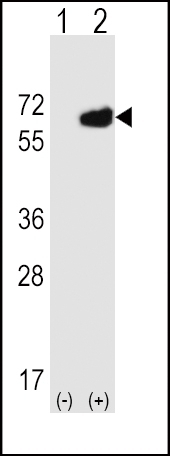
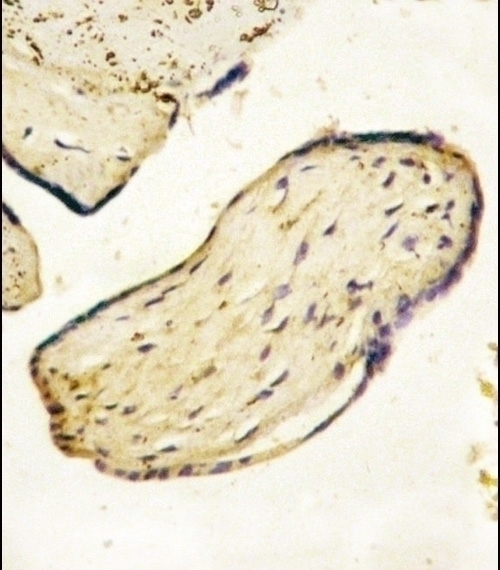
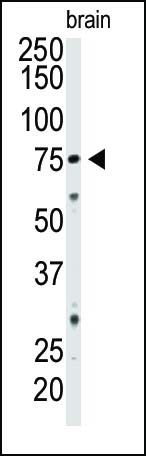
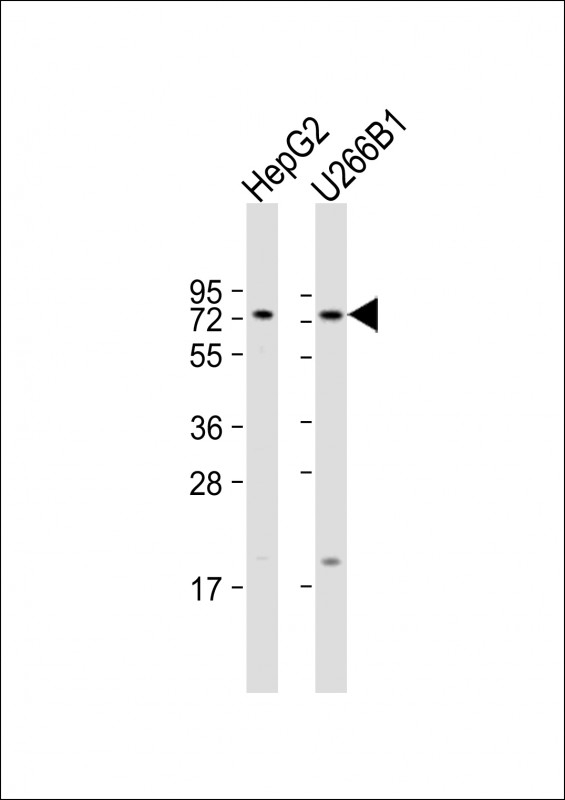
IHC-P, WB
Host Species:
Rabbit
Species Reactivity:
Human, Mouse
Conjugate:
Unconjugated
Specifications
Host Species:
Rabbit
Species Reactivity:
Human, Mouse
Immunogen:
This CD73 (NT5E) antibody is generated from rabbits immunized with a KLH conjugated synthetic peptide between 520-550 amino acids from the C-terminal region of human CD73 (NT5E).
Conjugate:
Unconjugated
Tested Applications:
IHC-P, WB
Application Note:
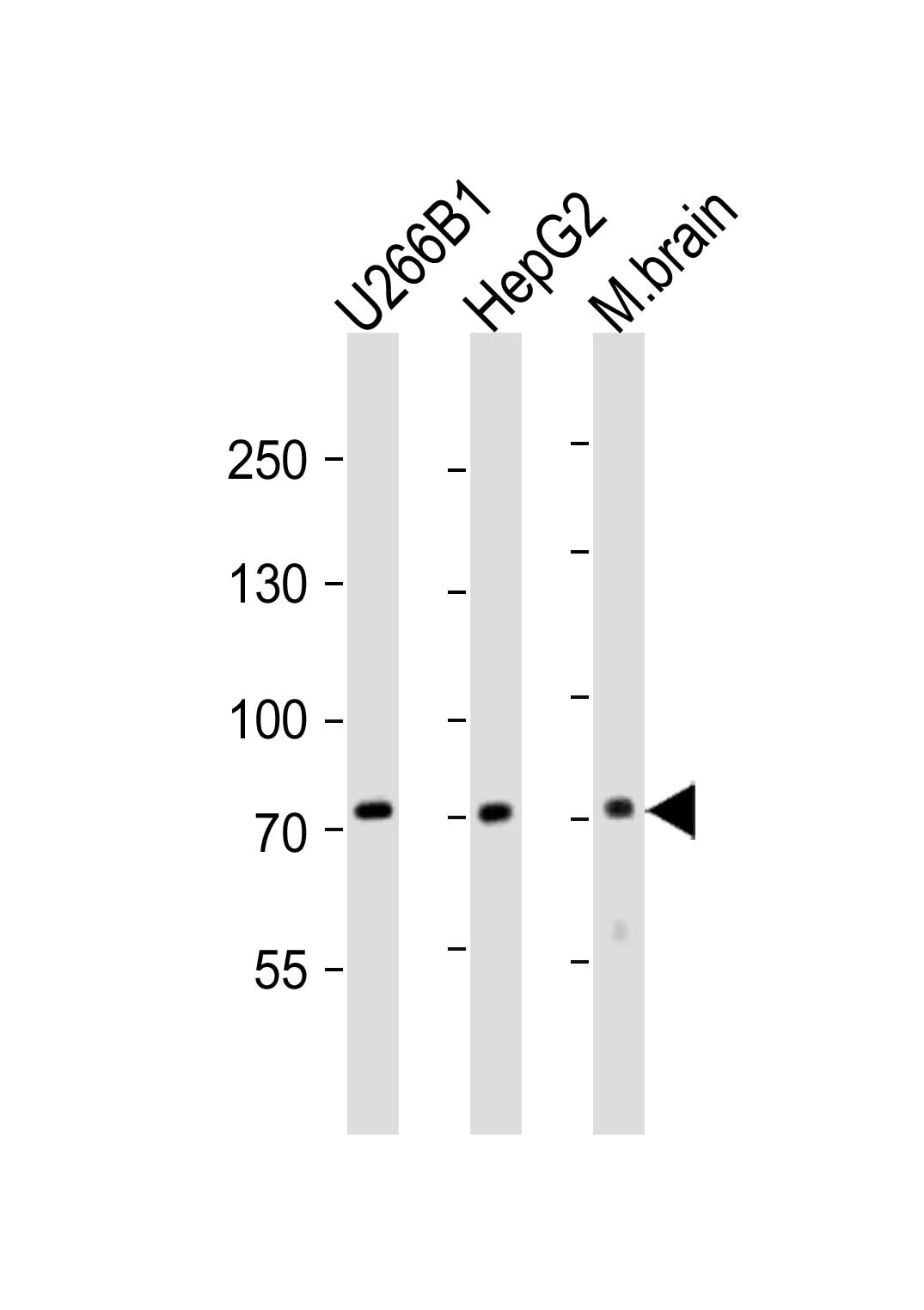
For WB starting dilution is: 1:1000
For IHC-P starting dilution is: 1:10~50
Predicted Molecular Weight:
63 kDa
Purification:
This antibody is prepared by Saturated Ammonium Sulfate (SAS) precipitation followed by dialysis
Clonality:
Polyclonal
Isotype:
Rabbit Ig
Physical State:
Liquid
Buffer:
Supplied in PBS with 0.09% (W/V) sodium azide.
Concentration:
batch dependent
Storage Conditions:
Store at 4°C for three months and -20°C, stable for up to one year. As with all antibodies care should be taken to avoid repeated freeze thaw cycles. Antibodies should not be exposed to prolonged high temperatures.
Ncbi Official Symbol:
NT5E
Additional Names:
5'-nucleotidase, 5'-NT, Ecto-5'-nucleotidase, CD73, NT5E, NT5, NTE
Protein Accession Number:
P21589
Protein Gi Number:
112825
Ncbi Gene Id Number:
4907
User Note:
Optimal dilutions for each application to be determined by the researcher.
Background:
Ecto-5-prime-nucleotidase (5-prime-ribonucleotide phosphohydrolase) catalyzes the conversion at neutral pH of purine 5-prime mononucleotides to nucleosides, the preferred substrate being AMP. The enzyme consists of a dimer of 2 identical 70 kD subunits bound externally to the plasma membrane by a glycosyl phosphatidyl inositol linkage. The enzyme is used as a marker of lymphocyte differentiation. Consequently, a deficiency of NT5E occurs in a variety of immunodeficiency diseases. Other forms of 5-prime nucleotidase exist in the cytoplasm and lysosomes and can be distinguished from ecto-NT5 by their substrate affinities, requirement for divalent magnesium ion, activation by ATP, and inhibition by inorganic phosphate. It is not known whether the different enzymes are coded by different genes or result from different posttranslational modifications of a single coding sequence.
Background Reference 1:
Hashikawa, T., et al., J. Dent. Res. 82(11):888-892 (2003). Rosi, F., et al., Biomed. Pharmacother. 56(2):100-104 (2002). Misumi, Y., et al., Eur. J. Biochem. 191(3):563-569 (1990). Boyle, J.M., et al., Hum. Genet. 81(1):88-92 (1988). Kalsi, K., et al., Mol. Cell. Biochem. 232 (1-2), 113-119 (2002).

FOR RESEARCH USE ONLY

For additional information, visit ProSci’s Terms & Conditions Page.

Disclaimer:
Optimal dilutions/concentrations should be determined by the end user. The information provided is a guideline for product use. This product is for research use only.

CATALOG NUMBER:

60-899

List Size:
400 ul

List Price:

$495.00

Shipping Info
Customize your order
Custom Antibody Services

New & Featured Products

CATALOG NUMBER: PM-7369-HRP

CATALOG NUMBER: PM-7369-biotin

CATALOG NUMBER: PM-7369