IAV
KD
KO
Most Cited
Most Images
Trial Size

CXCR4 Antibody

CATALOG NUMBER: 1009

Clonality:
Polyclonal
Tested Applications:
ELISA, Flow, ICC, IF, IHC-P, WB
Host Species:
Rabbit
Species Reactivity:
Human, Mouse, Rat
Conjugate:
Unconjugated
Specifications
Host Species:
Rabbit
Species Reactivity:
Human, Mouse, Rat
Homology:
Predicted species reactivity based on immunogen sequence: Bovine: (86%), Pig: (71%)
Immunogen:
Anti-CXCR4 antibody (1009) was raised against a peptide corresponding to 14 amino acids near the amino terminus of human CXCR4 isoform b.
The immunogen is located within the first 50 amino acids of CXCR4.
Conjugate:
Unconjugated
Tested Applications:
ELISA, Flow, ICC, IF, IHC-P, WB
Application Note:
WB: 1 - 2 μg/mL; IP/ ICC: 2 μg/mL; IHC-P: 5 μg/mL; IF: 20 μg/mL; Flow Cyt: 0.1 μg/mL.
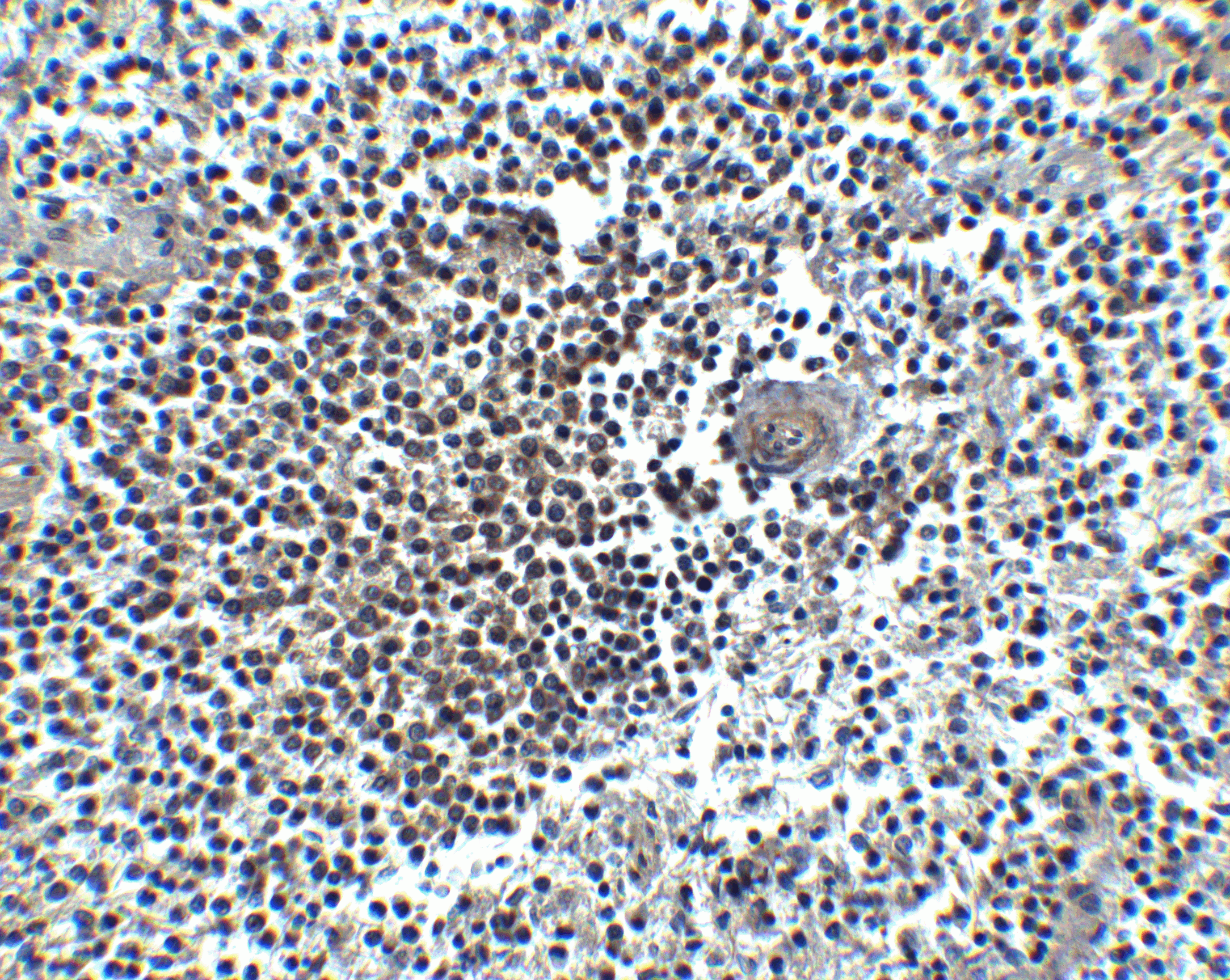
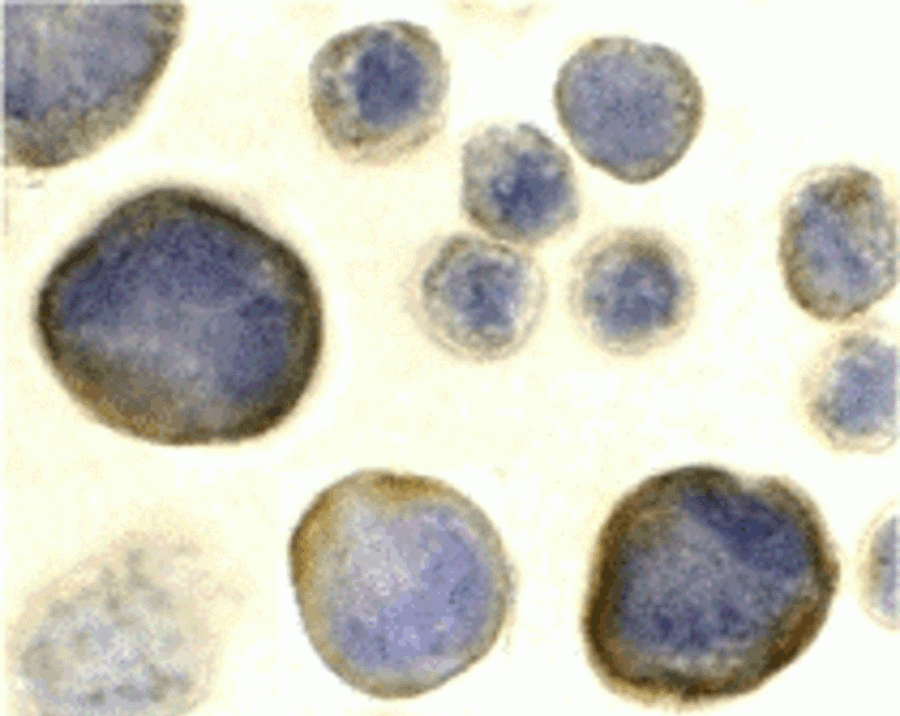
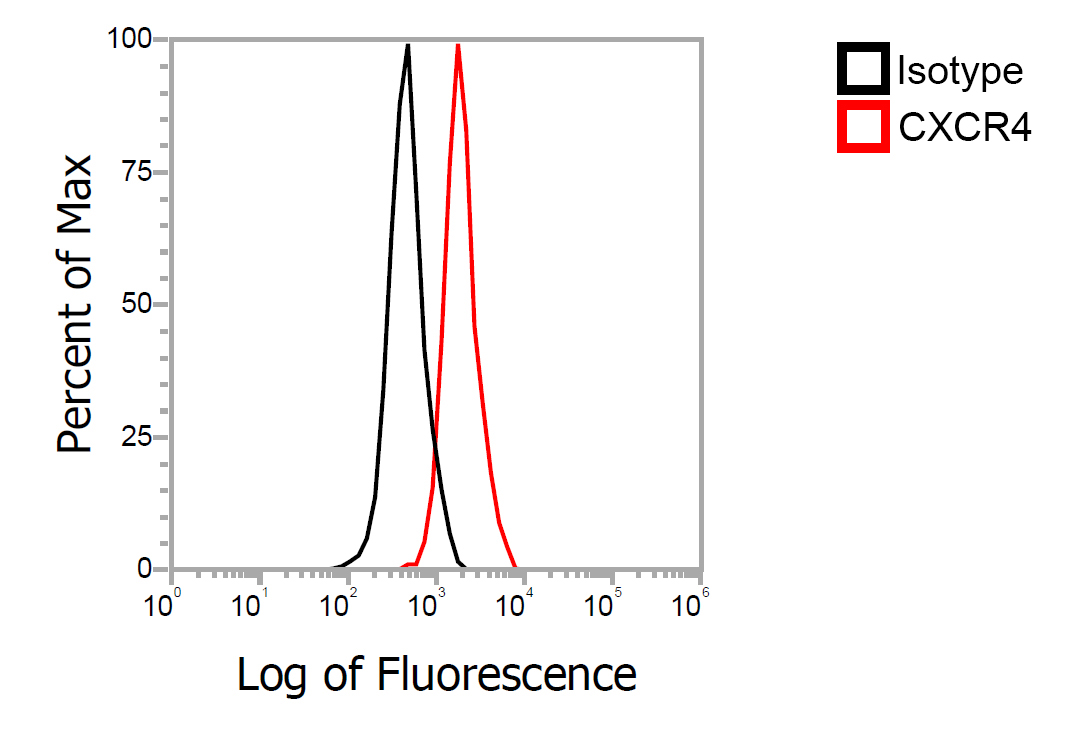
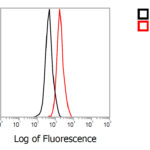
Antibody validated: Western Blot in human, mouse, and rat samples; Immunohistochemistry, Immunocytochemistry and Immunofluorescence in human samples; Flow Cytometry in human and mouse samples. All other applications and species not yet tested.
Specificity:
CXCR4 Antibody is predicted to not cross-react with other CXCR familiy members.
Positive Control 1:
Cat. No. 1201 - HeLa Cell Lysate
Positive Control 2:
Cat. No. 1202 - A431 Cell Lysate
Positive Control 3:
Cat. No. 1210 - 293 Cell Lysate
Positive Control 4:
Cat. No. 1211 – HepG2 Cell Lysate
Positive Control 5:
Cat. No. 1282 – NIH/3T3 Cell Lysate
Positive Control 6:
Cat. No. 1471 – Rat thymus Lysate
Predicted Molecular Weight:
Predicted: 40 kDa
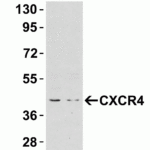
Observed: 44 kDa (Post-modification: 2 N-linked glycosylation)
Validation:

Independent Antibody Validation (Figure 2) shows similar CXCR4 expression profile in both human and mouse cell lines detected by two independent anti-CXCR4 antibodies that recognize different epitopes, 1009 against N-terminus ectodomain and 1012 against the second extracellular loop.  CXCR4 proteins are detected in most of the cell lines, but not in THP-1 cells by the two independent antibodies.  Additionally, Figure 2 shows the mouse CXCR4 protein in NIH/3T3 and C2C12 cell lines migrates slightly slower than human isoform b detected by both CXCR4 antibodies (1009 and 1012), which is well correlated with their calculated molecular masses (40.4 kDa vs 39.7 kDa). 

siRNA knockdown validation (Figure 3): Anti-CXCR4 antibody (1009) specificity was further verified by CXCR4 specific siRNA knockdown. CXCR4 signal in HeLa cells transfected with CXCR4 siRNAs was weaker in comparison with that in HeLa cells transfected with control siRNAs.

Animal Species Reactivity (Figure 4): Anti-CXCR4 antibodies (1009 and 1012) can detect the expression of CXCR4 protein in rat thymus, but not in rat brain and rat heart.

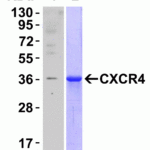
Recombinant Protein Test (Figure 5) shows that anti-CXCR4 antibody (1009) detects partial recombinant CXCR4 protein that contains the amino acids of 1009 antigenic peptide.  A band with same size can be observed in coomassie blue staining.

Isoforms:
Human CXCR4 has four isoforms, including isoform a (356aa, 40.2kD), isoform b (352aa, 39.7kD), isoform c (423aa, 47.6kD), and isoform d (385aa, 43.4kD). This antibody detects human isoform b only, but not other human isoforms. Mouse CXCR4 has two isoforms, including isoform 1 (359aa, 40.4kD) and isoform 2 (357aa, 40.2kD). Rat CXCR4 has only one isoform identified so far (349aa, 39.4kD).
Purification:
CXCR4 Antibody is affinity chromatography purified via peptide column.
Clonality:
Polyclonal
Isotype:
IgG
physical-state:
Liquid
Buffer:
CXCR4 Antibody is supplied in PBS containing 0.02% sodium azide.
Concentration:
1 mg/mL
Storage Conditions:
CXCR4 antibody can be stored at 4°C for three months and -20°C, stable for up to one year. As with all antibodies care should be taken to avoid repeated freeze thaw cycles. Antibodies should not be exposed to prolonged high temperatures.
Ncbi Official Symbol:
CXCR4
Additional Names:
CXCR4 Antibody: FB22, HM89, LAP3, LCR1, NPYR, WHIM, CD184, LESTR, NPY3R, NPYRL, HSY3RR, NPYY3R, D2S201E
Protein Accession Number:
NP_003458
Protein Gi Number:
4503175
Ncbi Gene Id Number:
7852
User Note:
Optimal dilutions for each application to be determined by the researcher.
Background:
CXCR4, a G-protein coupled receptor (GPCR) with seven transmembrane domains, is a CXC chemokine receptor specific for stromal-derived-factor-1 (SDF-1 or CXCL12). CXCR4 was initially discovered as one of the co-receptors for HIV entry into CD4+ T cells (1). Blocking CXCR4 could be potentially used as novel therapeutics for HIV treatment.

CXCR4 signaling plays an important role in the migration, proliferation and quiescence of hematopoietic stem cell and their retention within the bone marrow, where it has high levels of SDF-1/CXCL12(2). It has been demonstrated that CXCR4 signaling mediates CD20 up-regulation on B cells (3).

CXCR4 is highly expressed in more than 23 types of cancer, including breast cancer, ovarian cancer, melanoma, and prostate cancer, while there is very less or no expression of CXCR4 in healthy tissues. CXCR4 expression in cancer cells has been reported to be associated with tumor survival, growth and metastasis in tissues with high levels of SDF-1/CXCL12, such as lungs, liver and bone marrow (4,5).

CXCR4 has been shown to regulate neuronal migration, cell positioning and axon wiring (6,7). CXCR4 mutant mice displayed aberrant neuronal distribution, which implicates the role in neuronal disorders such as epilepsy. CXCR4 is also involved in WHIM syndrome (8). WHIM mutations in CXCR4 were recently found in patients with Waldenstrom's macroglobulinemia, and these mutations are correlated to clinical resistance to ibrutinib (9,10).

Background Reference 1:
Dimitrov DS. Cell 1997;91:721-730
Background Reference 2:
Chen et al. Circ Res. 2010;107:1083-93
Background Reference 3:
Pavlasova et al. Blood 2016; 128: 1609-13
Background Reference 4:
Sun et al. Cancer Metastasis Reviews 2010;29:709-22
Background Reference 5:
Balkwill F. Nature Reviews 2004;4:540-50
Background Reference 6:
Bagri et al. Development 2002; 129:4249-60
Background Reference 7:
Yang et al. Development 2013;140:4554-64
Background Reference 8:
Balabanjian et al. The Journal of Clinical Investigation 2008; 118:1074-84
Background Reference 9:
Hunter et al. Blood 2014;123:1637-46
Background Reference 10:
Treon et al. N. Engl. J. Med. 2015;372:1430-40
Citation 1:
Odemis et al. CXCR7 is an active component of SDF-1 signalling in astrocytes and Schwann cells. J Cell Sci. 2010;123(Pt 7):1081-8. PMID: 20197403
Citation 2:
Kozak et al. Segregation of CD4 and CXCR4 into distinct lipid microdomains in T lymphocytes suggests a mechanism for membrane destabilization by human immunodeficiency virus. J Virol. 2002;76(4):1802-15.PMID: 11799176
Citation 3:
Scala et al. Human melanoma metastases express functional CXCR4. Clin Cancer Res 2006;12(8):2427-33. PMID: 16638848
Citation 4:
Recasens-Zorzo et al. Pharmacological modulation of CXCR4 cooperates with BET bromodomain inhibition in diffuse large B-cell lymphoma.Haematologica. PMID: 29954928
Citation 5:
Pandit et al. Chronic allergen challenge induces pulmonary extramedullary hematopoiesis. Exp Lung Res. 2011;37(5):279-90. PMID: 21309736
Citation 6:
Nobuko et al. microRNA-150 regulates mobilization and migration of bone marrow-derived mononuclear cells by targeting CXCR4. PLoS ONE 2011; 6(10):e23114. PMID: 22039399
Citation 7:
Nimmagadda et al. Immunoimaging of CXCR4 expression in brain tumor xenografts using SPECT/CT. J Nucl Med. 2009;50(7):1124-30.PMID: 19525448
Citation 8:
Lee et al. Gene expression in temporal lobe epilepsy is consistent with increased release of glutamate by astrocytes. Mol Med. 2007;13(1-2):1-13. PMID: 17515952
Citation 9:
Terlika et al. Sustained exposure to nicotine leads to extramedullary hematopoiesis in the spleen. Stem Cells 2006;24:2373-81. PMID: 16825610

FOR RESEARCH USE ONLY

For additional information, visit ProSci’s Terms & Conditions Page.

Disclaimer:
Optimal dilutions/concentrations should be determined by the end user. The information provided is a guideline for product use. This product is for research use only.

CATALOG NUMBER:

1009

List Size:
0.02 mg, 0.1 mg

List Price:

Price range: $99.00 through $445.00

Shipping Info
Customize your order
Custom Antibody Services

New & Featured Products

CATALOG NUMBER: PM-7369-HRP

CATALOG NUMBER: PM-7369-biotin

CATALOG NUMBER: PM-7369