GLI2 Antibody

CATALOG NUMBER: 27-430

Clonality:
Polyclonal
Tested Applications:
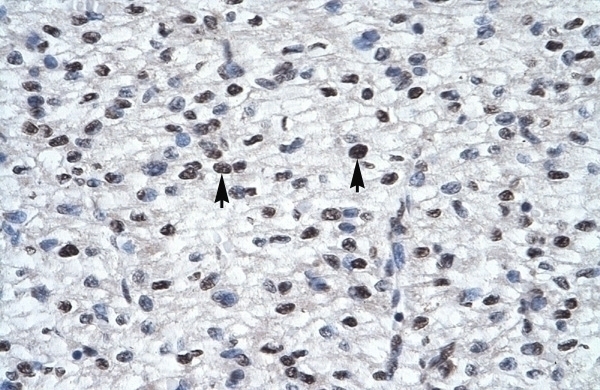
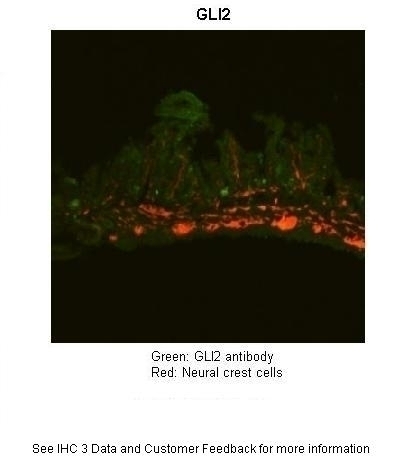
ELISA, IHC, WB
Host Species:
Rabbit
Species Reactivity:
Human
Conjugate:
Unconjugated
Specifications
Host Species:
Rabbit
Species Reactivity:
Human
Immunogen:
Antibody produced in rabbits immunized with a synthetic peptide corresponding a region of human GLI2.
Conjugate:
Unconjugated
Tested Applications:
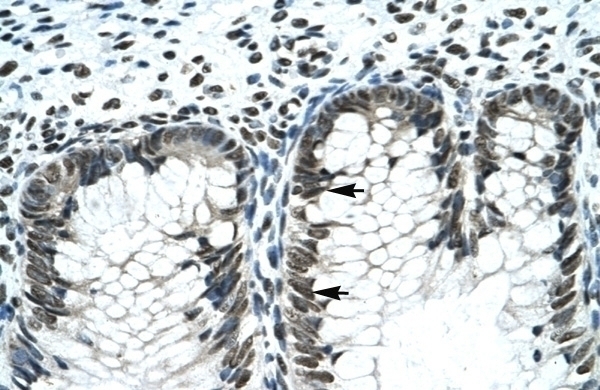
ELISA, IHC, WB
Application Note:
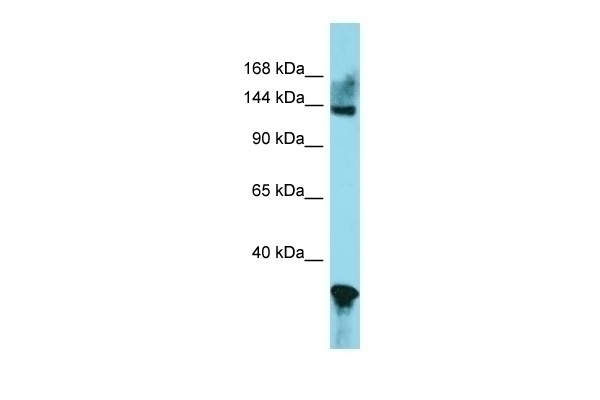
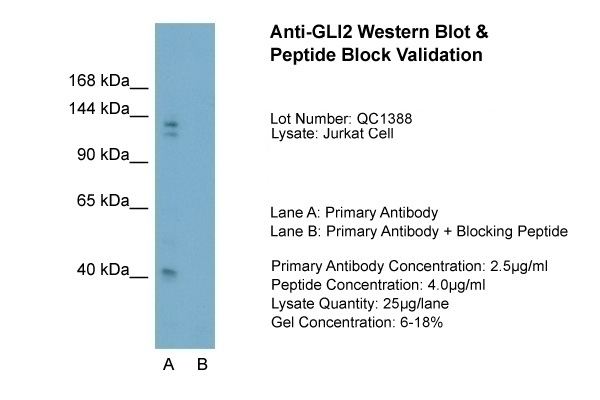
GLI2 antibody can be used for detection of GLI2 by ELISA at 1:312500. GLI2 antibody can be used for detection of GLI2 by western blot at 1.25 μg/mL, and HRP conjugated secondary antibody should be diluted 1:50,000 - 100,000.
Positive Control 1:
Cat. No. 1205 - Jurkat Cell Lysate
Predicted Molecular Weight:
133 kDa
Purification:
Antibody is purified by protein A chromatography method.
Clonality:
Polyclonal
Physical State:
Liquid
Buffer:
Purified antibody supplied in 1x PBS buffer with 0.09% (w/v) sodium azide and 2% sucrose.
Concentration:
batch dependent
Storage Conditions:
For short periods of storage (days) store at 4°C. For longer periods of storage, store GLI2 antibody at -20°C. As with any antibody avoid repeat freeze-thaw cycles.
Ncbi Official Symbol:
GLI2
Additional Names:
GLI2, HPE9, THP1, THP2
Protein Accession Number:
NP_084655
Protein Gi Number:
13518231
Ncbi Gene Id Number:
2736
User Note:
Optimal dilutions for each application to be determined by the researcher.
Background:
GLI2 encodes a protein which belongs to the C2H2-type zinc finger protein subclass of the Gli family. Members of this subclass are characterized as transcription factors which bind DNA through zinc finger motifs. These motifs contain conserved H-C links. Gli family zinc finger proteins are mediators of Sonic hedgehog (Shh) signaling and they are implicated as potent oncogenes in the embryonal carcinoma cell. The protein encoded by this gene localizes to the cytoplasm and activates patched Drosophila homolog (PTCH) gene expression. It is also thought to play a role during embryogenesis. The encoded protein is associated with several phenotypes- Greig cephalopolysyndactyly syndrome, Pallister-Hall syndrome, preaxial polydactyly type IV, postaxial polydactyly types A1 and B.

Background Reference 1:
Ikram, M.S., et al., (2004) J. Invest. Dermatol. 122 (6), 1503-1509.

FOR RESEARCH USE ONLY

For additional information, visit ProSci’s Terms & Conditions Page.

Disclaimer:
This product is for research use only.

CATALOG NUMBER:

27-430

List Size:
100 ul

List Price:

$473.00

Shipping Info
Customize your order
Custom Antibody Services

New & Featured Products

CATALOG NUMBER: PM-7369-HRP

CATALOG NUMBER: PM-7369-biotin

CATALOG NUMBER: PM-7369