
GSTM3 Antibody

CATALOG NUMBER: 30-882

Clonality:
Polyclonal
Tested Applications:
ELISA, WB
Host Species:
Rabbit
Species Reactivity:
Human
Conjugate:
Unconjugated
Specifications
Host Species:
Rabbit
Species Reactivity:
Human
Immunogen:
Antibody produced in rabbits immunized with a synthetic peptide corresponding a region of human GSTM3.
Conjugate:
Unconjugated
Tested Applications:
ELISA, WB
Application Note:
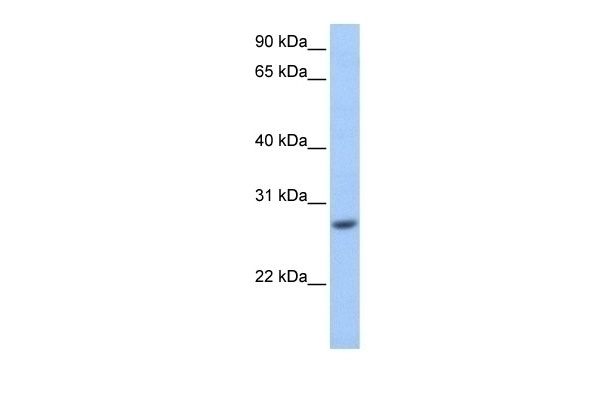
GSTM3 antibody can be used for detection of GSTM3 by ELISA at 1:312500. GSTM3 antibody can be used for detection of GSTM3 by western blot at 1 μg/mL, and HRP conjugated secondary antibody should be diluted 1:50,000 - 100,000.
Positive Control 1:
Cat. No. 1211 - HepG2 Cell Lysate
Predicted Molecular Weight:
26 kDa
Purification:
Antibody is purified by peptide affinity chromatography method.
Clonality:
Polyclonal
Physical State:
Liquid
Buffer:
Purified antibody supplied in 1x PBS buffer with 0.09% (w/v) sodium azide and 2% sucrose.
Concentration:
batch dependent
Storage Conditions:
For short periods of storage (days) store at 4°C. For longer periods of storage, store GSTM3 antibody at -20°C. As with any antibody avoid repeat freeze-thaw cycles.
Ncbi Official Symbol:
GSTM3
Additional Names:
GSTM3, GST5, GSTB, GSTM3-3, GTM3, MGC3310, MGC3704
Protein Accession Number:
NP_000840
Protein Gi Number:
23065552
Ncbi Gene Id Number:
2947
User Note:
Optimal dilutions for each application to be determined by the researcher.
Background:
Cytosolic and membrane-bound forms of glutathione S-transferase are encoded by two distinct supergene families. At present, eight distinct classes of the soluble cytoplasmic mammalian glutathione S-transferases have been identified: alpha, kappa, mu, omega, pi, sigma, theta and zeta. GSTM3 is a glutathione S-transferase that belongs to the mu class. The mu class of enzymes functions in the detoxification of electrophilic compounds, including carcinogens, therapeutic drugs, environmental toxins and products of oxidative stress, by conjugation with glutathione. The genes encoding the mu class of enzymes are organized in a gene cluster on chromosome 1p13.3 and are known to be highly polymorphic. These genetic variations can change an individual's susceptibility to carcinogens and toxins as well as affect the toxicity and efficacy of certain drugs. Mutations of this class mu gene have been linked with a slight increase in a number of cancers, likely due to exposure with environmental toxins.Cytosolic and membrane-bound forms of glutathione S-transferase are encoded by two distinct supergene families. At present, eight distinct classes of the soluble cytoplasmic mammalian glutathione S-transferases have been identified: alpha, kappa, mu, omega, pi, sigma, theta and zeta. This gene encodes a glutathione S-transferase that belongs to the mu class. The mu class of enzymes functions in the detoxification of electrophilic compounds, including carcinogens, therapeutic drugs, environmental toxins and products of oxidative stress, by conjugation with glutathione. The genes encoding the mu class of enzymes are organized in a gene cluster on chromosome 1p13.3 and are known to be highly polymorphic. These genetic variations can change an individual's susceptibility to carcinogens and toxins as well as affect the toxicity and efficacy of certain drugs. Mutations of this class mu gene have been linked with a slight increase in a number of cancers, likely due to exposure with environmental toxins. Publication Note: This RefSeq record includes a subset of the publications that are available for this gene. Please see the Entrez Gene record to access additional publications.
Background Reference 1:
Ikeda, S., (2008) Am. J. Gastroenterol. 103 (6), 1476-1487.

FOR RESEARCH USE ONLY

For additional information, visit ProSci’s Terms & Conditions Page.

Disclaimer:
This product is for research use only.

CATALOG NUMBER:

30-882

List Size:
100 ul

List Price:

$519.00

Shipping Info
Customize your order
Custom Antibody Services

New & Featured Products

CATALOG NUMBER: PM-7369-HRP

CATALOG NUMBER: PM-7369-biotin

CATALOG NUMBER: PM-7369