
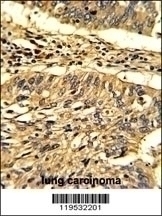
Hsp 60 Antibody

CATALOG NUMBER: 62-475

Clonality:
Polyclonal
Tested Applications:
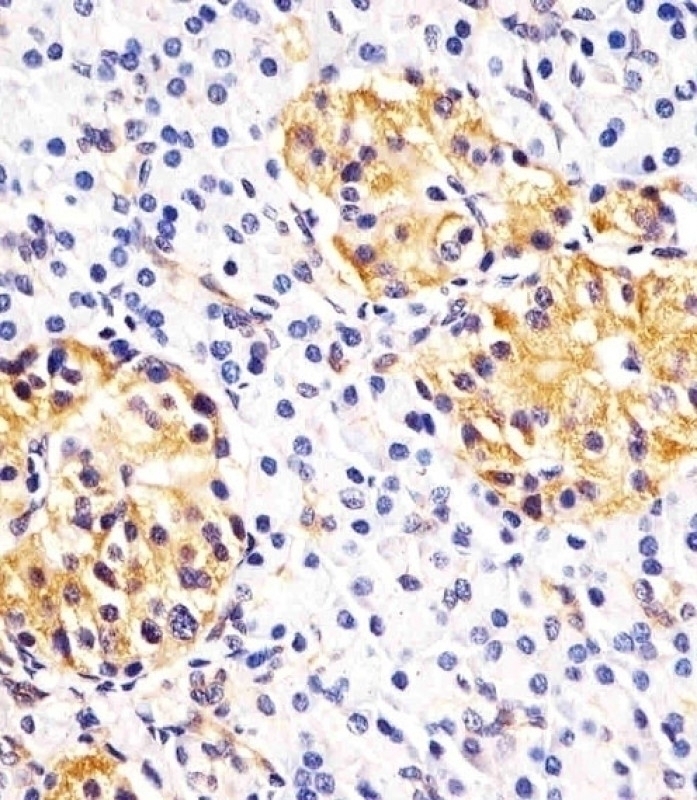
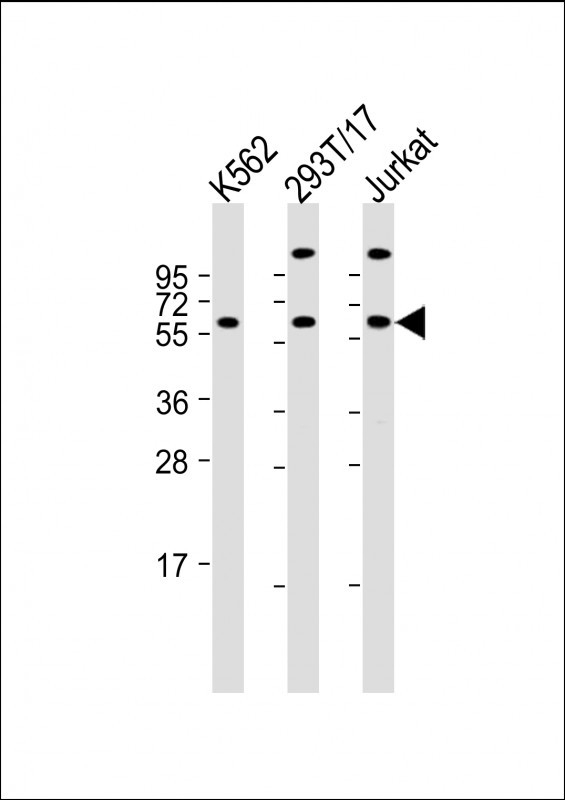
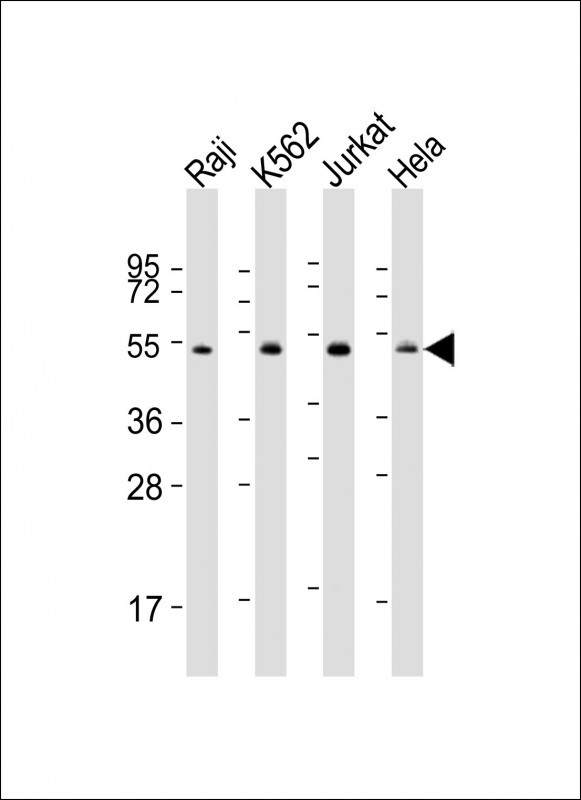
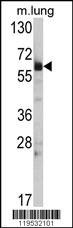
IHC-P, WB
Host Species:
Rabbit
Species Reactivity:
Human, Mouse
Conjugate:
Unconjugated
Specifications
Host Species:
Rabbit
Species Reactivity:
Human, Mouse
Immunogen:
This Hsp 60 antibody is generated from rabbits immunized with a KLH conjugated synthetic peptide between 80-109 amino acids from the N-terminal region of human Hsp 60.
Conjugate:
Unconjugated
Tested Applications:
IHC-P, WB
Application Note:
For IHC-P starting dilution is: 1:25
For WB starting dilution is: 1:2000
Predicted Molecular Weight:
55 kDa
Purification:
This antibody is purified through a protein A column, followed by peptide affinity purification.
Clonality:
Polyclonal
Isotype:
Rabbit Ig
Physical State:
Liquid
Buffer:
Supplied in PBS with 0.09% (W/V) sodium azide.
Concentration:
batch dependent
Storage Conditions:
Store at 4°C for three months and -20°C, stable for up to one year. As with all antibodies care should be taken to avoid repeated freeze thaw cycles. Antibodies should not be exposed to prolonged high temperatures.
Ncbi Official Symbol:
HSPA14
Additional Names:
Heat shock 70 kDa protein 14, HSP70-like protein 1, Heat shock protein HSP60, HSPA14, HSP60, HSP70L1
Protein Accession Number:
Q0VDF9
Protein Gi Number:
121948121
Ncbi Gene Id Number:
51182
User Note:
Optimal dilutions for each application to be determined by the researcher.
Background:
Hsp60 is a member of a highly conserved family which includes molecular chaperones from several species such as plant Hsp60 (known as Rubisco binding protein), GroEL, the E.coli Hsp60 and 65 kDa major antigen of mycobacteria. In eukaryotes, Hsp60 is localized in the mitochondrial matrix and in plants Hsp60 is localized in the chloroplast. Mitochondria, chloroplasts and bacteria have a common ancestry (>1 billion years) and this fact together with the high degree of homology between the divegent Hsp60s would indicate that these proteins carry out a primitive but important function which is similar to all of these different species.The common characteristics of the Hsp60s from the divergent species are i) high abundance, ii) induction with environmental stress such as heat shock, iii) homo oligomeric structures of either 7 or 14 subunits which reversibly dissociate in the presence of magnesium ions and ATP, iv) ATPase activity and v) a role in folding and assembly of oligomeric protein structures. These similarities are supported by recent studies where the single ring human mitochondrial homolog, Hsp60 with its co chaperonin, Hsp10 were expressed in a E. coli strain, engineered so that the groE operon is under strict regulatory control. This study has demonstrated that expression of Hsp60-Hsp10 was able to carry out all essential in vivo functions of GroEL and its co chaperonin, GroES. Consistent with their functions as chaperones, Hsp60 and Hsp10 have been suggested to act as docking molecules with a passive role in the maturation of caspase processing. Data demonstrates that recombinant Hsp60 and Hsp10 have been shown to accelerate the activation of procaspase 3 by cytochrome c and dATP in an ATP dependent manner. Hsps are intracellular proteins which are thought to serve protective functions against infection and cellular stress, however several recent studies indicate that members of the Hsp60 family are linked to a number of autoimmune diseases, artherosclerosis and chlamydial disease.
Background Reference 1:
Velez,D.R., et.al., Am. J. Obstet. Gynecol. 200 (2), 209 (2009)

FOR RESEARCH USE ONLY

For additional information, visit ProSci’s Terms & Conditions Page.

Disclaimer:
Optimal dilutions/concentrations should be determined by the end user. The information provided is a guideline for product use. This product is for research use only.

CATALOG NUMBER:

62-475

List Size:
400 ul

List Price:

$495.00

Shipping Info
Customize your order
Custom Antibody Services

New & Featured Products

CATALOG NUMBER: PM-7369-HRP

CATALOG NUMBER: PM-7369-biotin

CATALOG NUMBER: PM-7369