HSPA5 Antibody

CATALOG NUMBER: 57-011

Clonality:
Polyclonal
Tested Applications:
Flow, IF, IHC-P, WB
Host Species:
Rabbit
Species Reactivity:
Human, Mouse
Conjugate:
Unconjugated
Specifications
Host Species:
Rabbit
Species Reactivity:
Human, Mouse
Immunogen:
This HSPA5 antibody is generated from rabbits immunized with a recombinant protein encoding full length human HSPA5.
Conjugate:
Unconjugated
Tested Applications:
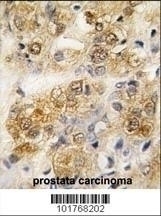
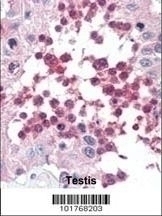
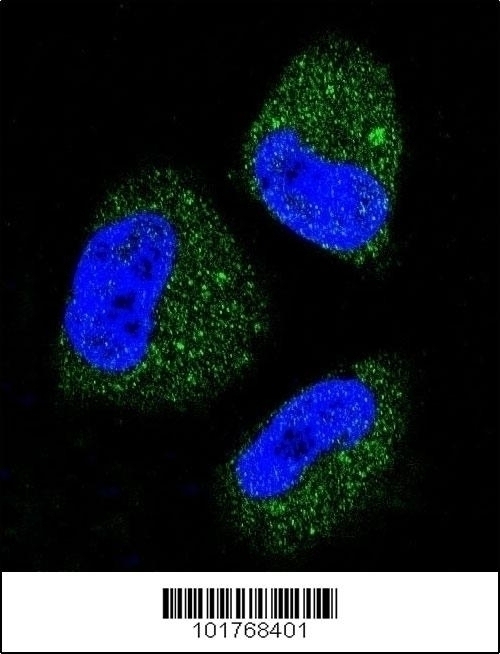
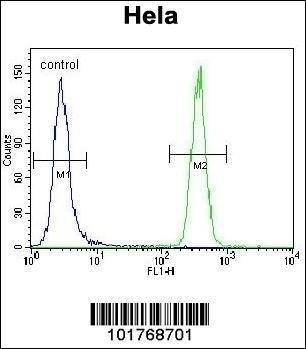
Flow, IF, IHC-P, WB
Application Note:
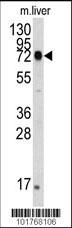
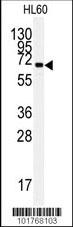
For WB starting dilution is: 1:1000
For IHC-P starting dilution is: 1:50~100
For IF starting dilution is: 1:10~50
For FACS starting dilution is: 1:10~50
Predicted Molecular Weight:
72 kDa
Purification:
This antibody is prepared by Saturated Ammonium Sulfate (SAS) precipitation followed by dialysis
Clonality:
Polyclonal
Isotype:
Rabbit Ig
Physical State:
Liquid
Buffer:
Supplied in PBS with 0.09% (W/V) sodium azide.
Concentration:
batch dependent
Storage Conditions:
Store at 4°C for three months and -20°C, stable for up to one year. As with all antibodies care should be taken to avoid repeated freeze thaw cycles. Antibodies should not be exposed to prolonged high temperatures.
Ncbi Official Symbol:
HSPA5
Additional Names:
78 kDa glucose-regulated protein, GRP-78, Endoplasmic reticulum lumenal Ca(2+)-binding protein grp78, Heat shock 70 kDa protein 5, Immunoglobulin heavy chain-binding protein, BiP, HSPA5, GRP78
Protein Accession Number:
P11021
Protein Gi Number:
14916999
Ncbi Gene Id Number:
3309
User Note:
Optimal dilutions for each application to be determined by the researcher.
Background:
In cooperation with other chaperones, HSP70s stabilize preexistent proteins against aggregation and mediate the folding of newly translated polypeptides in the cytosol as well as within organelles. The HSP70s in mitochondria and the endoplasmic reticulum play an additional role by providing a driving force for protein translocation. They are involved in signal transduction pathways in cooperation with HSP90. They participate in all these processes through their ability to recognize nonnative conformations of other proteins. They bind extended peptide segments with a net hydrophobic character exposed by polypeptides during translation and membrane translocation, or following stress-induced damage.
Background Reference 1:
Strausberg, R.L., et al., Proc. Natl. Acad. Sci. U.S.A. 99(26):16899-16903 (2002). Milner, C.M., et al., Immunogenetics 32(4):242-251 (1990). Sargent, C.A., et al., Proc. Natl. Acad. Sci. U.S.A. 86(6):1968-1972 (1989). Drabent, B., et al., Nucleic Acids Res. 14(22):8933-8948 (1986). Hunt, C., et al., Proc. Natl. Acad. Sci. U.S.A. 82(19):6455-6459 (1985).

FOR RESEARCH USE ONLY

For additional information, visit ProSci’s Terms & Conditions Page.

Disclaimer:
Optimal dilutions/concentrations should be determined by the end user. The information provided is a guideline for product use. This product is for research use only.

CATALOG NUMBER:

57-011

List Size:
200 ul

List Price:

$495.00

Shipping Info
Customize your order
Custom Antibody Services

New & Featured Products

CATALOG NUMBER: PM-7369-HRP

CATALOG NUMBER: PM-7369-biotin

CATALOG NUMBER: PM-7369