Cell Treatment
IAV
Trial Size

IRAK-4 Antibody

CATALOG NUMBER: 3125

Clonality:
Polyclonal
Tested Applications:
ELISA, ICC, IF, WB
Host Species:
Rabbit
Species Reactivity:
Human
Conjugate:
Unconjugated
Specifications
Host Species:
Rabbit
Species Reactivity:
Human
Homology:
Predicted species reactivity based on immunogen sequence: Bovine: (85%), Mouse: (85%), Rat (77%)
Immunogen:
Anti-IRAK4 antibody (3125) was raised against a peptide corresponding to 13 amino acids near the carboxy terminus of human IRAK4.
The immunogen is located within the last 50 amino acids of IRAK4.
Conjugate:
Unconjugated
Tested Applications:
ELISA, ICC, IF, WB
Application Note:
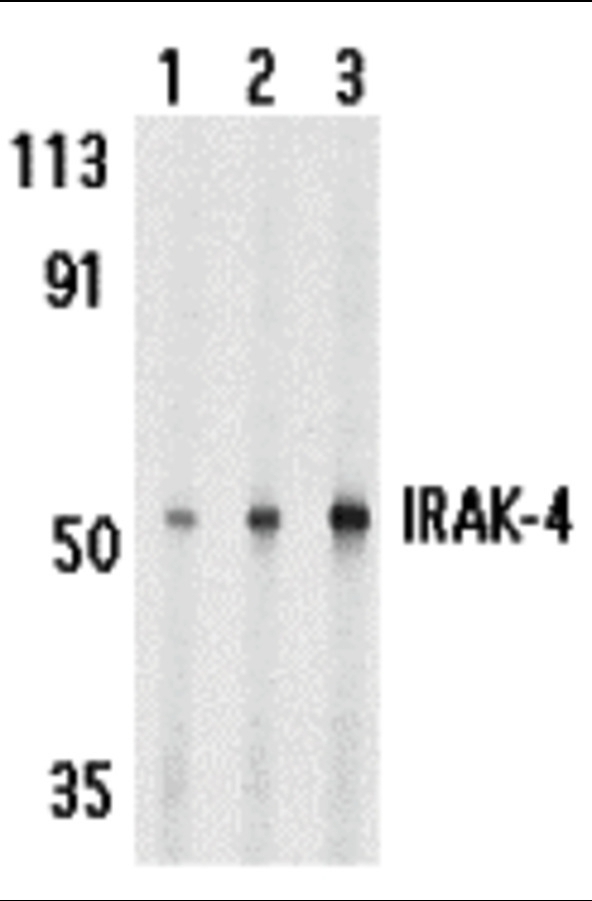
WB: 1-4 μg/mL; ICC: 10 μg/mL; IF: 10 μg/mL.
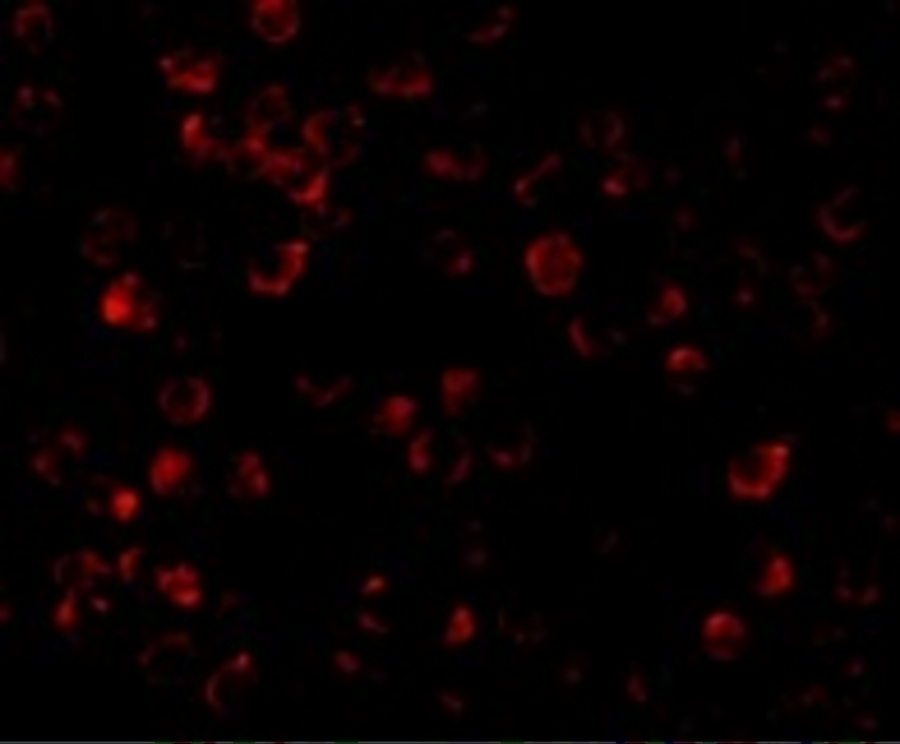
Antibody validated: Western Blot in human samples; Immunocytochemistry in human samples and Immunofluorescence in human samples. All other applications and species not yet tested.
Specificity:
IRAK-4 antibody is predicted to not cross-react with other members of the IRAK protein family.
Positive Control 1:
Cat. No. 1204 - K562 Cell Lysate
Positive Control 2:
Cat. No. 1201 - HeLa Cell Lysate
Positive Control 3:
Cat. No. 1224 -Daudi Cell Lysate
Positive Control 4:
Cat. No. 1211 -HepG2 Cell Lysate
Positive Control 5:
Cat. No. 17-004 - K-562 Cell Slide
Predicted Molecular Weight:
Predicted: 52kD
Observed: 55 kD
Validation:

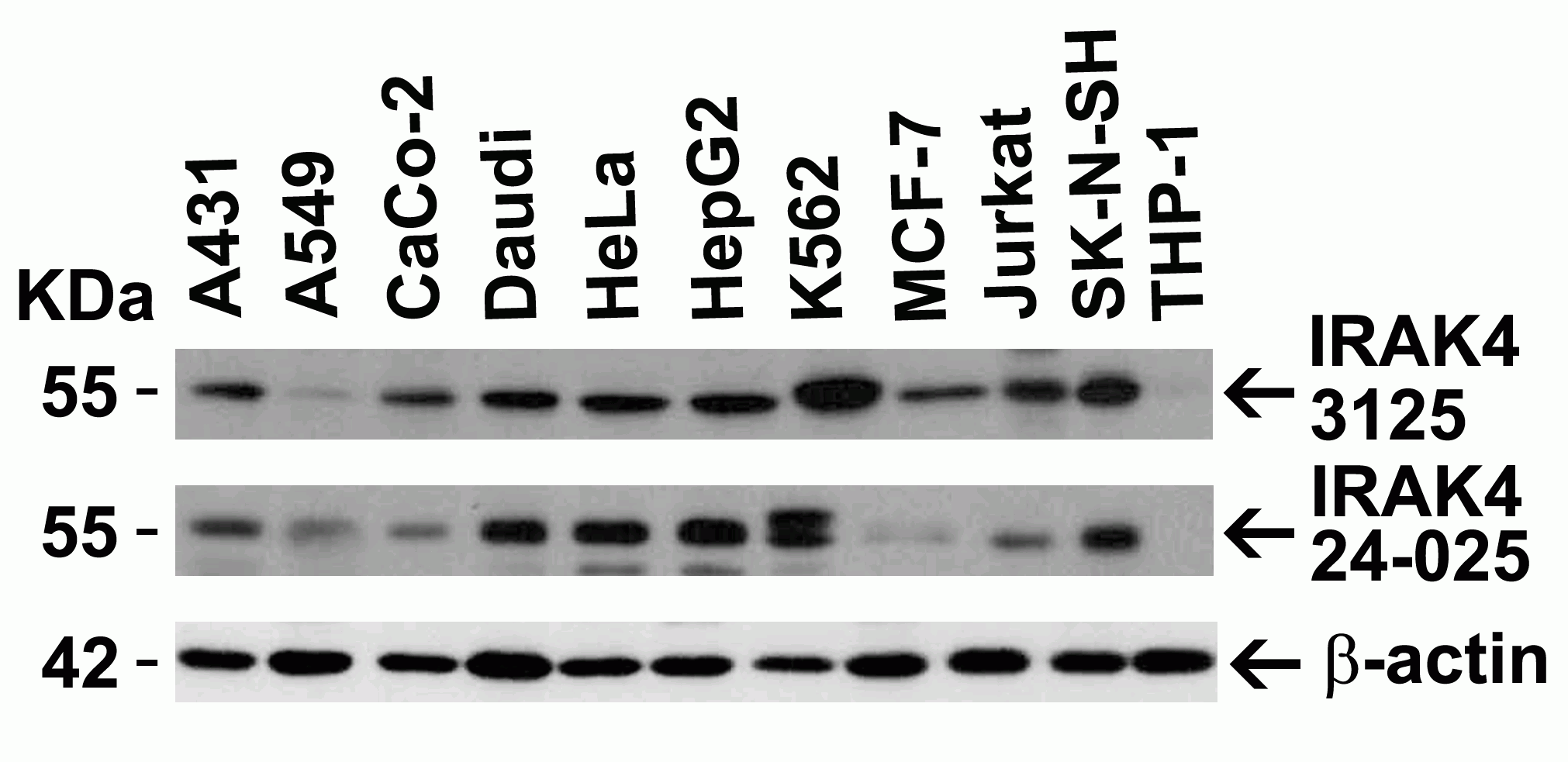
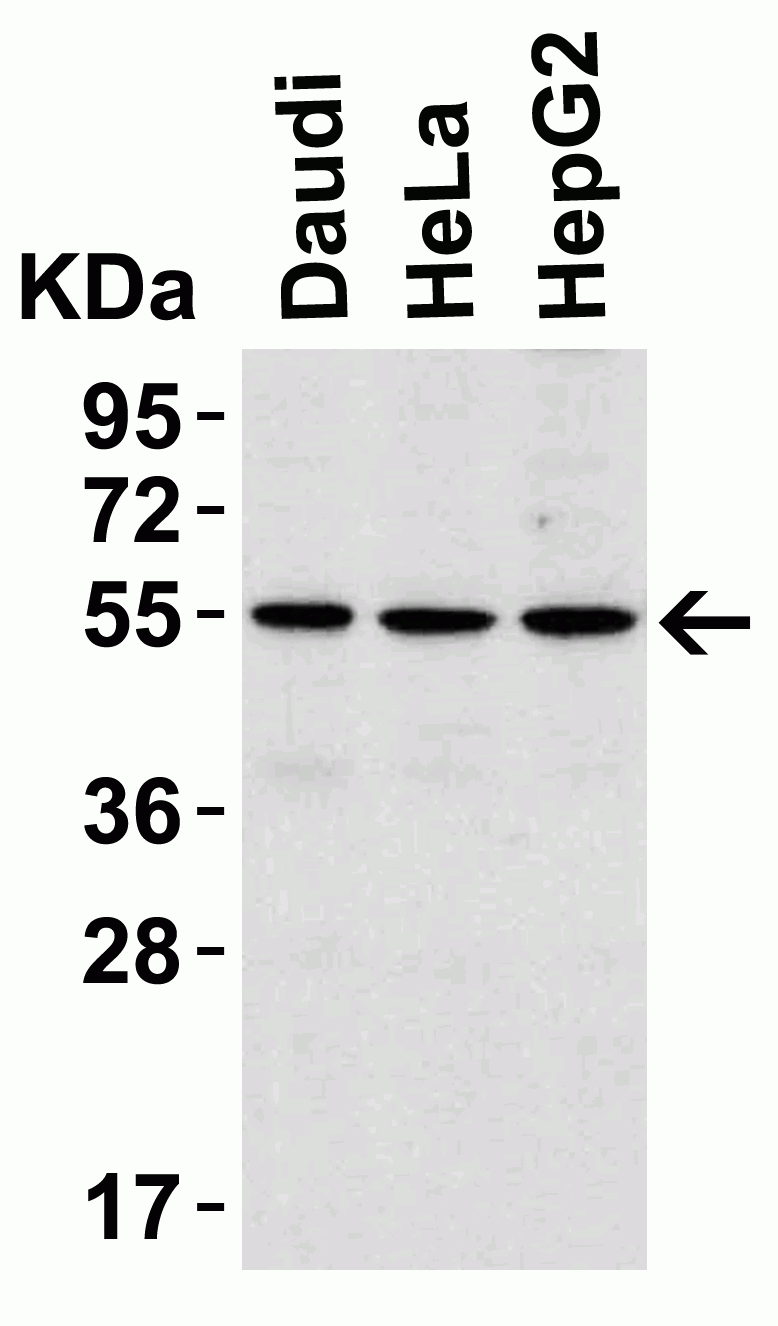
Independent Antibody Validation in Cell lines (Figure 2) shows similar IRAK4 expression profile in human cell lines detected by two independent anti-IRAK4 antibodies that recognize different epitopes, 3125 against C-terminus domain and 24-025 against recombinant fusion protein. IRAK4 proteins are detected in the most tested cell lines at different expression levels by the two independent antibodies.

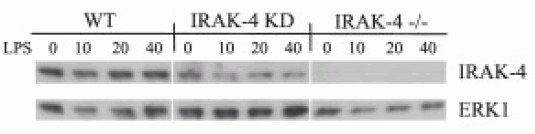
KO validation (Figure 6): Anti-IRAK4 antibody (3125) specificity was further verified by IRAK4 knockout and mutant mice. IRAK4 signal in the macrophages of IRAK KO mice and mutant mice was disrupted as compared to wild type mice.

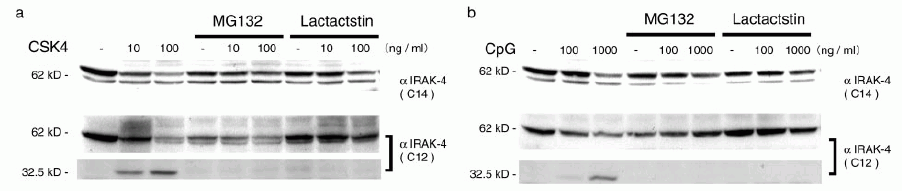
Regulated expression validation (Figure 7): IRAK4 expression detected by anit-IRAK4 antibodies (3125) was reduced with CSK-4 treatment, which was rescued by proteasome inhibitors.

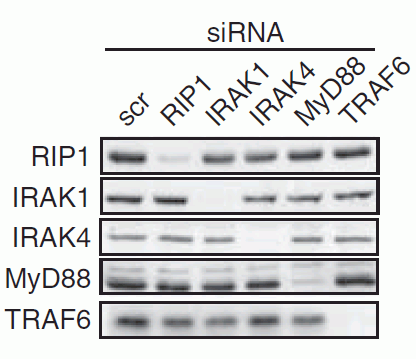
KD validation (Figure 8): Anti-IRAK4 antibody (3125) specificity was further verified by IRAK4 knockdown. IRAK4 signal was disrupted in HEK293T cells transfected with IRAK4 siRNAs.

Isoforms:
Human IRAK4 has 2 isoforms, including isoform 1 (460aa, 52kD) and isoform 2 (336aa, 38kD). Mouse IRAK4 has one isoform (459aa, 51kD) and Rat IRAK4 also has one isoform (461aa, 51kD). 3125 can detect human isoforms as well as mouse and rat IRAK4.
Purification:
IRAK-4 Antibody is affinity chromatography purified via peptide column.
Clonality:
Polyclonal
Isotype:
IgG
physical-state:
Liquid
Buffer:
IRAK-4 Antibody is supplied in PBS containing 0.02% sodium azide.
Concentration:
1 mg/mL
Storage Conditions:
IRAK-4 antibody can be stored at 4°C for three months and -20°C, stable for up to one year. As with all antibodies care should be taken to avoid repeated freeze thaw cycles. Antibodies should not be exposed to prolonged high temperatures.
Ncbi Official Symbol:
IRAK4
Additional Names:
IRAK-4 Antibody: IPD1, REN64, IRAK-4, NY-REN-64, Interleukin-1 receptor-associated kinase 4, Renal carcinoma antigen NY-REN-64
Protein Accession Number:
AAM15772
Protein Gi Number:
20219010
Ncbi Gene Id Number:
51135
User Note:
Optimal dilutions for each application to be determined by the researcher.
Background:
IRAK-4 Antibody: Interleukin-1 (IL-1) and lipopolysaccharide (LPS) induces cellular responses through IL-1 receptor (IL-1R) and Toll-like receptors (TLR). IL-1R-associated kinases (IRAK, IRAK2, and IRAK-M) regulate the activation of NF-κB and MAP kinase (MAPK) by IL-1R/TLR. A novel member in the IRAK/Pelle family was recently identified and designated IRAK-4. Overexpression of IRAK-4 activates NF-κB and MAPK pathways. IRAK-4 interacts with and phosphorylates IRAK-1. IRAK-4-deficient animals are completely resistant to the challenge with LPS. Animals and humans lacking IRAK-4 are impaired in their responses to viral and bacterial challenges. Members in IRAK/Pelle family play a central role in IL-1R/TLR mediated inflammatory responses and in innate immunity.
Background Reference 1:
Cao et al. Science 1996; 271:1128-31
Background Reference 2:
Muzio et al. Science 1997; 278:1612-5.
Background Reference 3:
Wesche et al. J. Biol. Chem. 1999; 274:19403-10.
Background Reference 4:
Li et al. Proc. Natl. Acad. Sci. USA 2002; 99:5567-72.
Citation 1:
Koziczak-Holbro et al. IRAK-4 kinase activity-dependent and -independent regulation of lipopolysaccharide-inducible genes. Eur J Immunol. 2008;38(3):788-96.PMID: 18266302
Citation 2:
Hatao et al. Prolonged Toll-like receptor stimulation leads to down-regulation of IRAK-4 protein. J Leukoc Biol. 2004;76(4):904-8. PMID: 15258191
Citation 3:
Heinz et al. The death domain-containing protein Unc5CL is a novel MyD88-independent activator of the pro-inflammatory IRAK signaling cascade. Cell Death Differ. 2012;19(4):722-31. PMID: 22158417
Citation 4:
Koziczak-Holbro et al. IRAK-4 kinase activity is required for interleukin-1 (IL-1)receptor- and toll-like receptor 7-mediated signaling and gene expression. J Biol Chem. 2007;282(18):13552-60. PMID: 17337443

FOR RESEARCH USE ONLY

For additional information, visit ProSci’s Terms & Conditions Page.

Disclaimer:
Optimal dilutions/concentrations should be determined by the end user. The information provided is a guideline for product use. This product is for research use only.

CATALOG NUMBER:

3125

List Size:
0.02 mg, 0.1 mg

List Price:

Price range: $99.00 through $445.00

Shipping Info
Customize your order
Custom Antibody Services

New & Featured Products

CATALOG NUMBER: PM-7369-HRP

CATALOG NUMBER: PM-7369-biotin

CATALOG NUMBER: PM-7369