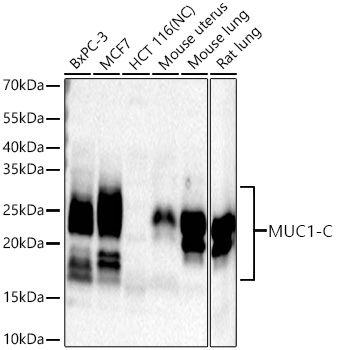
Western blot analysis of various lysates using MUC1-C Rabbit mAb at 1:1000 dilution incubated at room temperature for 1.5 hours. | Secondary antibody: HRP-conjugated Goat anti-Rabbit IgG (H+L) at 1:10000 dilution. | Lysates/proteins: 25 μg per lane. | Blocking buffer: 3% nonfat dry milk in TBST. | Detection: ECL Basic Kit. | Negative control (NC): HCT 116. | Exposure time: 45 s.
MUC1 Rabbit Recombinant Antibody (81-355)
CATALOG NUMBER: 81-355
Clonality:
Monoclonal
Tested Applications:
ELISA, IHC-P, WB
Host Species:
Rabbit
Species Reactivity:
Human, Mouse, Rat
Conjugate:
Unconjugated
Specifications
Host Species:
Rabbit
Species Reactivity:
Human, Mouse, Rat
Immunogen:
Synthetic peptide. This information is considered to be commercially sensitive.
Conjugate:
Unconjugated
Tested Applications:
ELISA, IHC-P, WB
Application Note:
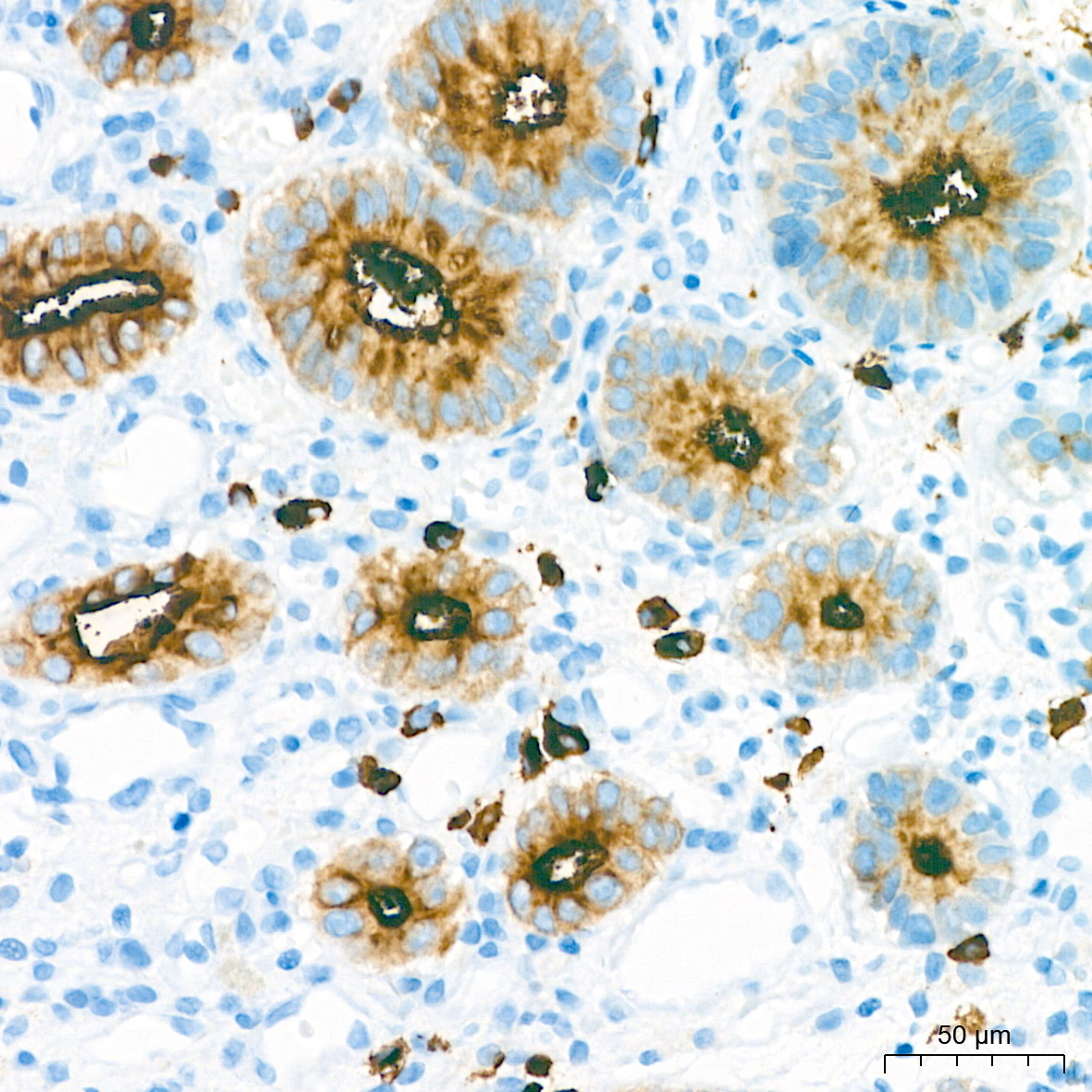
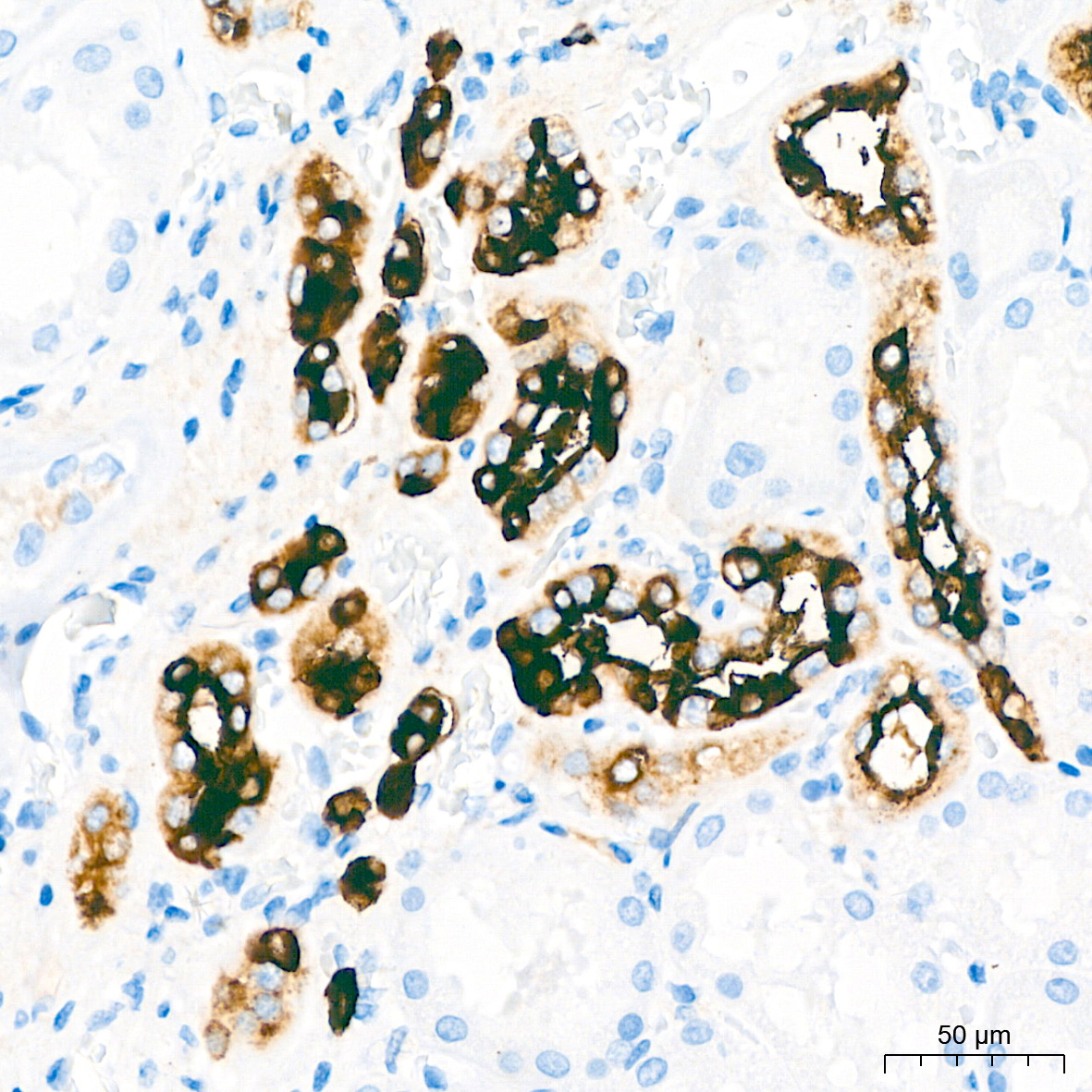
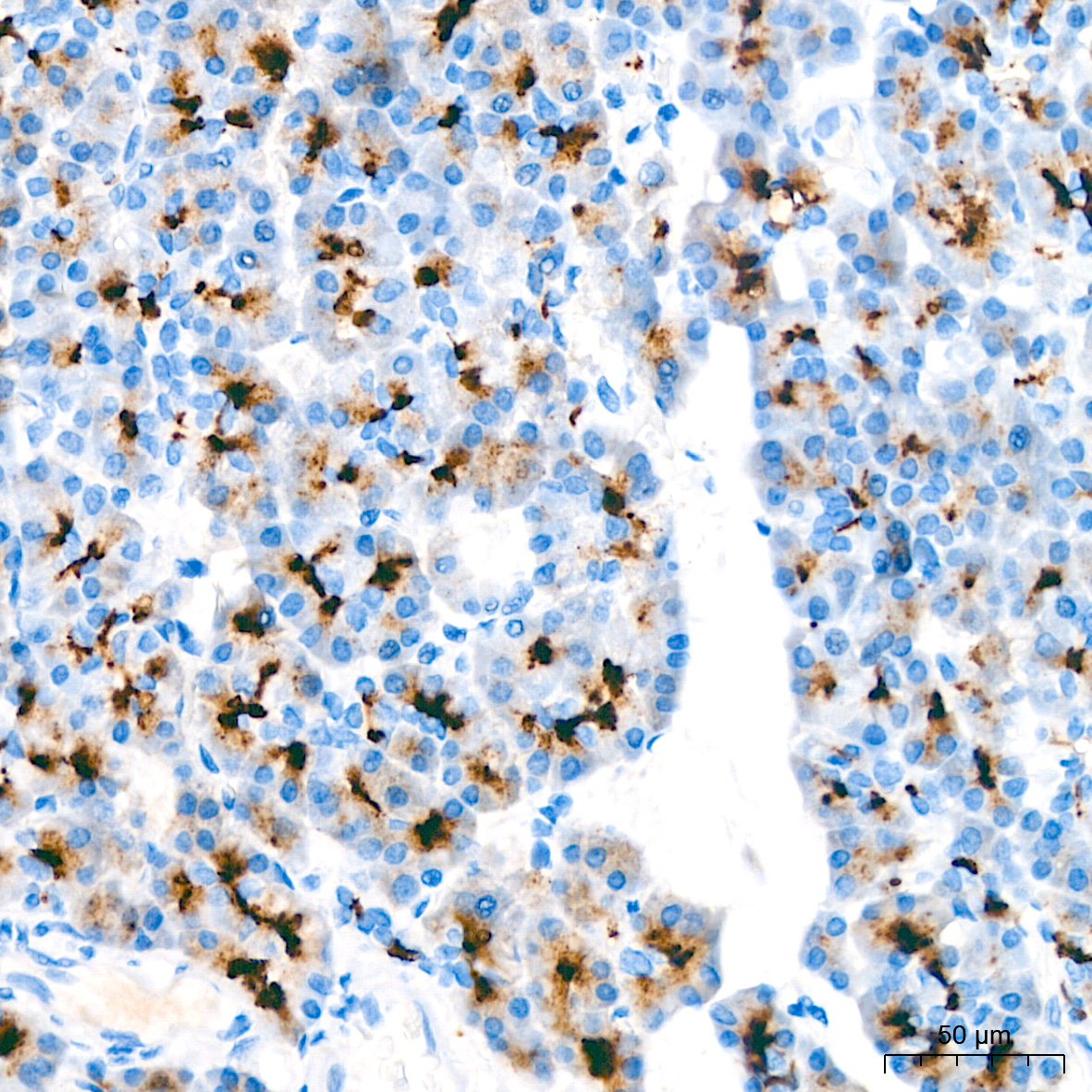
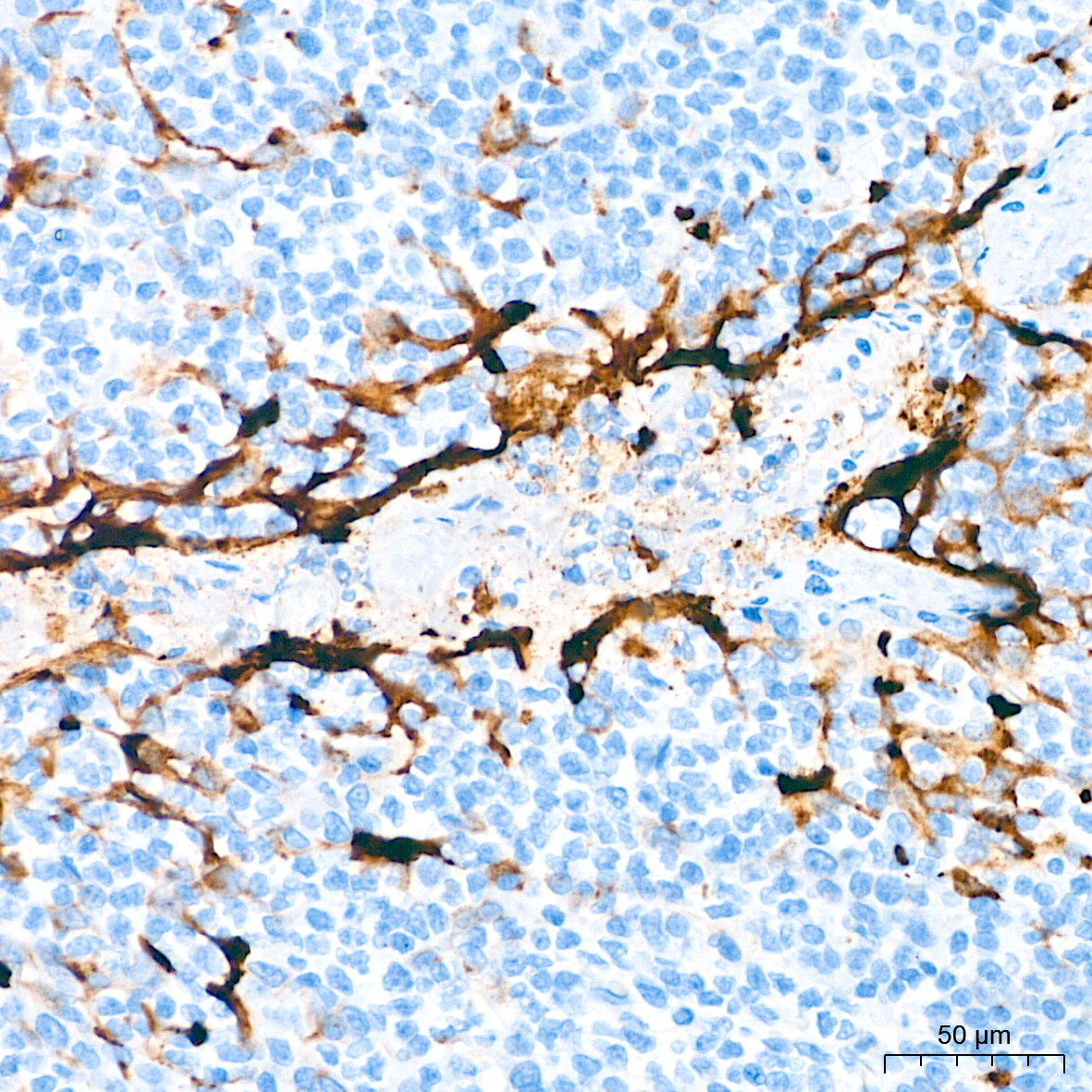
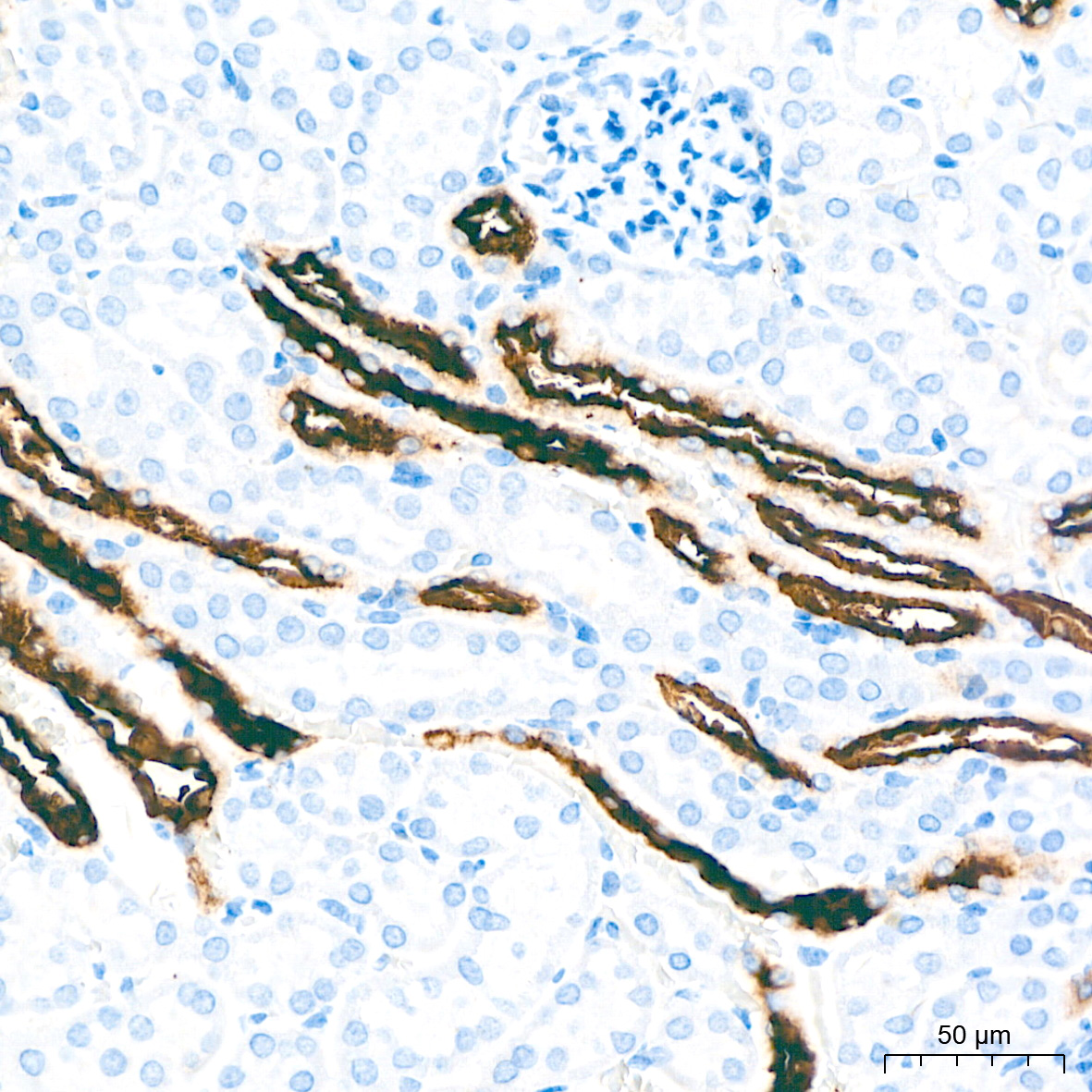
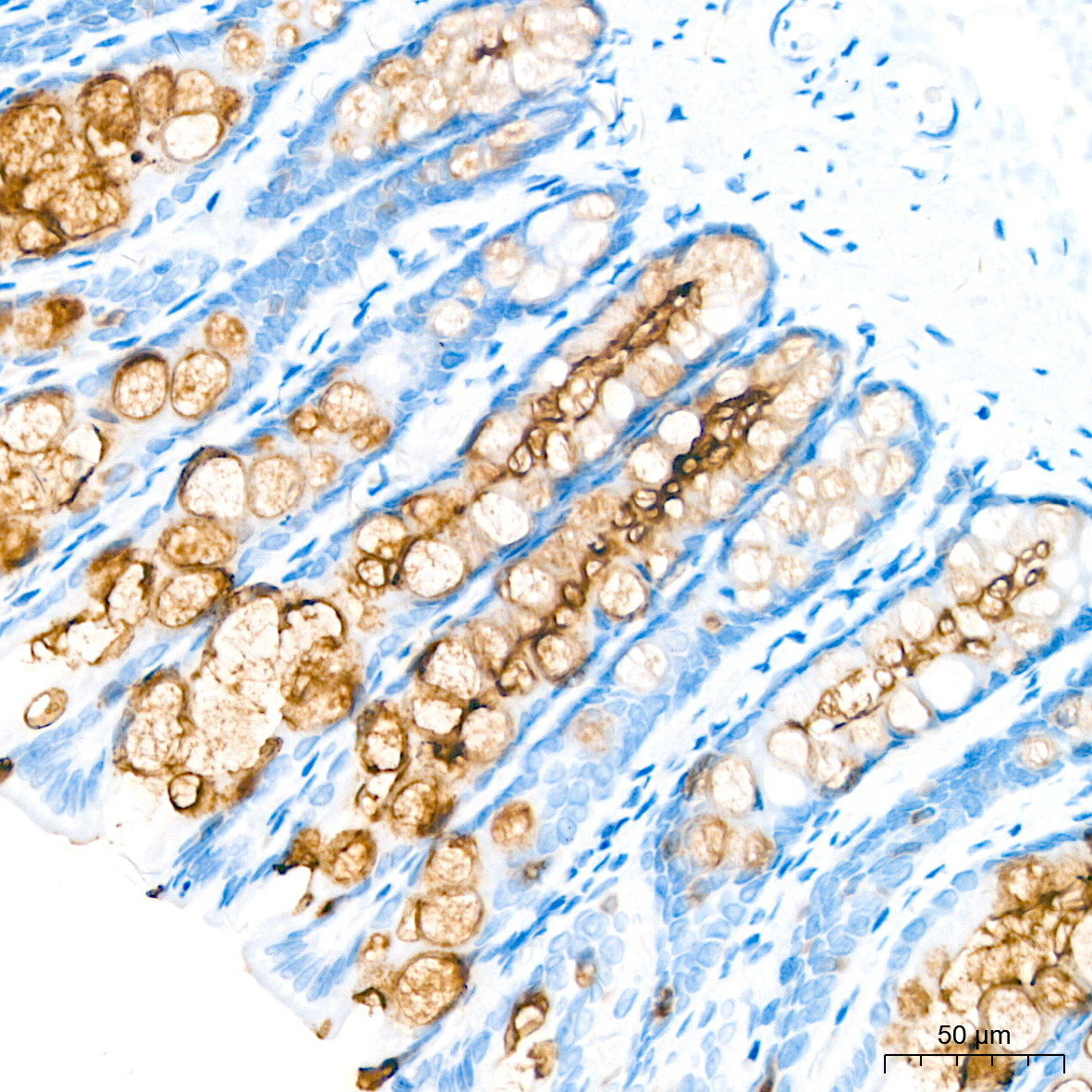
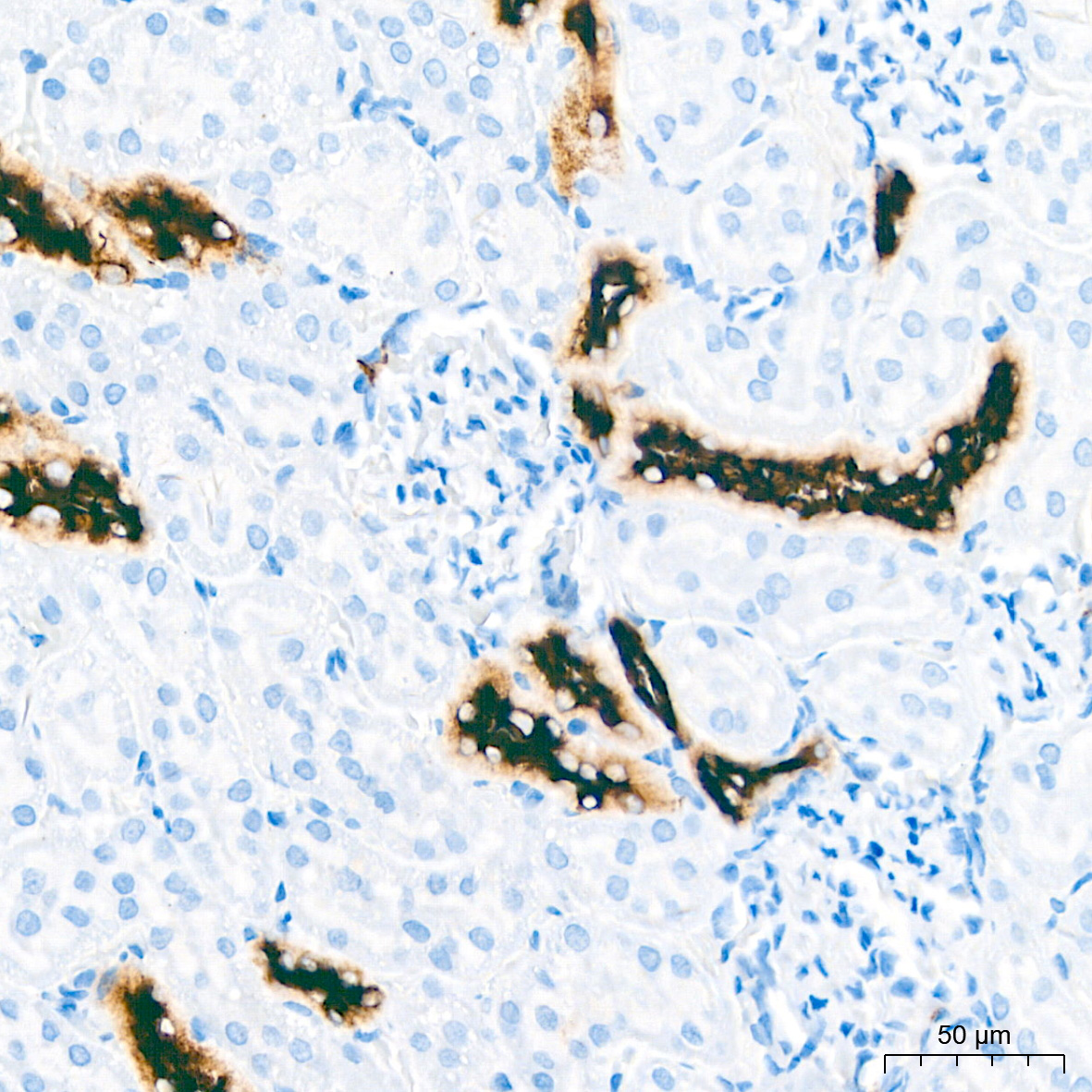
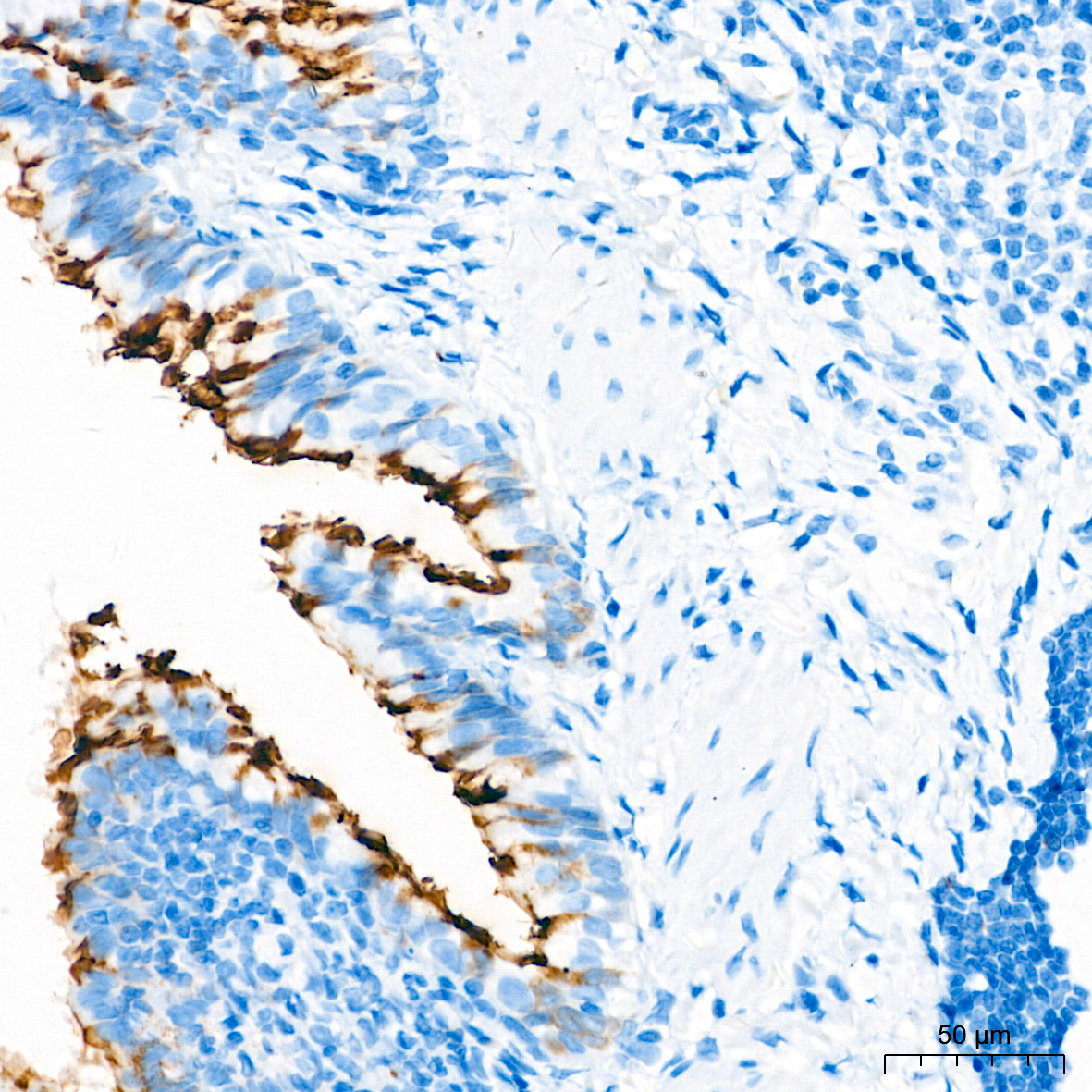
WB,1:1000 - 1:2000, IHC-P,1:200 - 1:800, ELISA,Recommended starting concentration is 1 μg/mL. Please optimize the concentration based on your specific assay requirements.
Positive Control 1:
BxPC-3,MCF7,Mouse uterus,Mouse lung,Rat lung
Predicted Molecular Weight:
122kDa
Advanced Validation
Properties
purification:
Affinity purification
Clonality:
Monoclonal
Isotype:
IgG
Physical State:
Liquid
Buffer:
Buffer: PBS with 0.02% sodium azide,0.05% BSA,50% glycerol,pH7.3.
Optimal dilutions for each application to be determined by the researcher.
Background
Background:
This gene encodes a membrane-bound protein that is a member of the mucin family. Mucins are O-glycosylated proteins that play an essential role in forming protective mucous barriers on epithelial surfaces. These proteins also play a role in intracellular signaling. This protein is expressed on the apical surface of epithelial cells that line the mucosal surfaces of many different tissues including lung, breast stomach and pancreas. This protein is proteolytically cleaved into alpha and beta subunits that form a heterodimeric complex. The N-terminal alpha subunit functions in cell-adhesion and the C-terminal beta subunit is involved in cell signaling. Overexpression, aberrant intracellular localization, and changes in glycosylation of this protein have been associated with carcinomas. This gene is known to contain a highly polymorphic variable number tandem repeats (VNTR) domain. Alternate splicing results in multiple transcript variants.
We use cookies on our website to give you the most relevant experience by remembering your preferences and repeat visits. By clicking “Accept”, you consent to the use of cookies.
This website uses cookies to improve your experience while you navigate through the website. Out of these, the cookies that are categorized as necessary are stored on your browser as they are essential for the working of basic functionalities of the website. We also use third-party cookies that help us analyze and understand how you use this website. These cookies will be stored in your browser only with your consent. You also have the option to opt-out of these cookies. But opting out of some of these cookies may affect your browsing experience.
Necessary cookies are absolutely essential for the website to function properly. These cookies ensure basic functionalities and security features of the website, anonymously.
Cookie
Duration
Description
cookielawinfo-checbox-analytics
11 months
This cookie is set by GDPR Cookie Consent plugin. The cookie is used to store the user consent for the cookies in the category "Analytics".
cookielawinfo-checbox-functional
11 months
The cookie is set by GDPR cookie consent to record the user consent for the cookies in the category "Functional".
cookielawinfo-checbox-others
11 months
This cookie is set by GDPR Cookie Consent plugin. The cookie is used to store the user consent for the cookies in the category "Other.
cookielawinfo-checkbox-necessary
11 months
This cookie is set by GDPR Cookie Consent plugin. The cookies is used to store the user consent for the cookies in the category "Necessary".
cookielawinfo-checkbox-performance
11 months
This cookie is set by GDPR Cookie Consent plugin. The cookie is used to store the user consent for the cookies in the category "Performance".
viewed_cookie_policy
11 months
The cookie is set by the GDPR Cookie Consent plugin and is used to store whether or not user has consented to the use of cookies. It does not store any personal data.
Functional cookies help to perform certain functionalities like sharing the content of the website on social media platforms, collect feedbacks, and other third-party features.
Performance cookies are used to understand and analyze the key performance indexes of the website which helps in delivering a better user experience for the visitors.
Analytical cookies are used to understand how visitors interact with the website. These cookies help provide information on metrics the number of visitors, bounce rate, traffic source, etc.
Advertisement cookies are used to provide visitors with relevant ads and marketing campaigns. These cookies track visitors across websites and collect information to provide customized ads.

![HIV-1 p24 Antibody [9D2F6] (HRP)](https://www.prosciantibodies.com/wp-content/uploads/2023/04/HIV-1-p24-Antibody-9D2F6_WB_PM-7369-139x300.gif)
![HIV-1 p24 Antibody [9D2F6] (biotin)](https://www.prosciantibodies.com/wp-content/uploads/2023/01/HIV-1-p24-Antibody-9D2F6_WB_PM-7369.gif)
![HIV-1 p24 Antibody [9D2F6]](https://www.prosciantibodies.com/wp-content/uploads/2022/09/HIV-1-p24-Antibody-9D2F6_WB_PM-7369-139x300.gif)