
Green Product
Trial Size

OASL Antibody

CATALOG NUMBER: 7775

Clonality:
Polyclonal
Tested Applications:
ELISA, ICC, IF, WB
Host Species:
Rabbit
Species Reactivity:
Human, Mouse, Rat
Conjugate:
Unconjugated
Specifications
Host Species:
Rabbit
Species Reactivity:
Human, Mouse, Rat
Immunogen:
OASL antibody was raised against a 17 amino acid peptide near the amino terminus of human OASL.
The immunogen is located within the first 50 amino acids of OASL.
Conjugate:
Unconjugated
Tested Applications:
ELISA, ICC, IF, WB
Application Note:
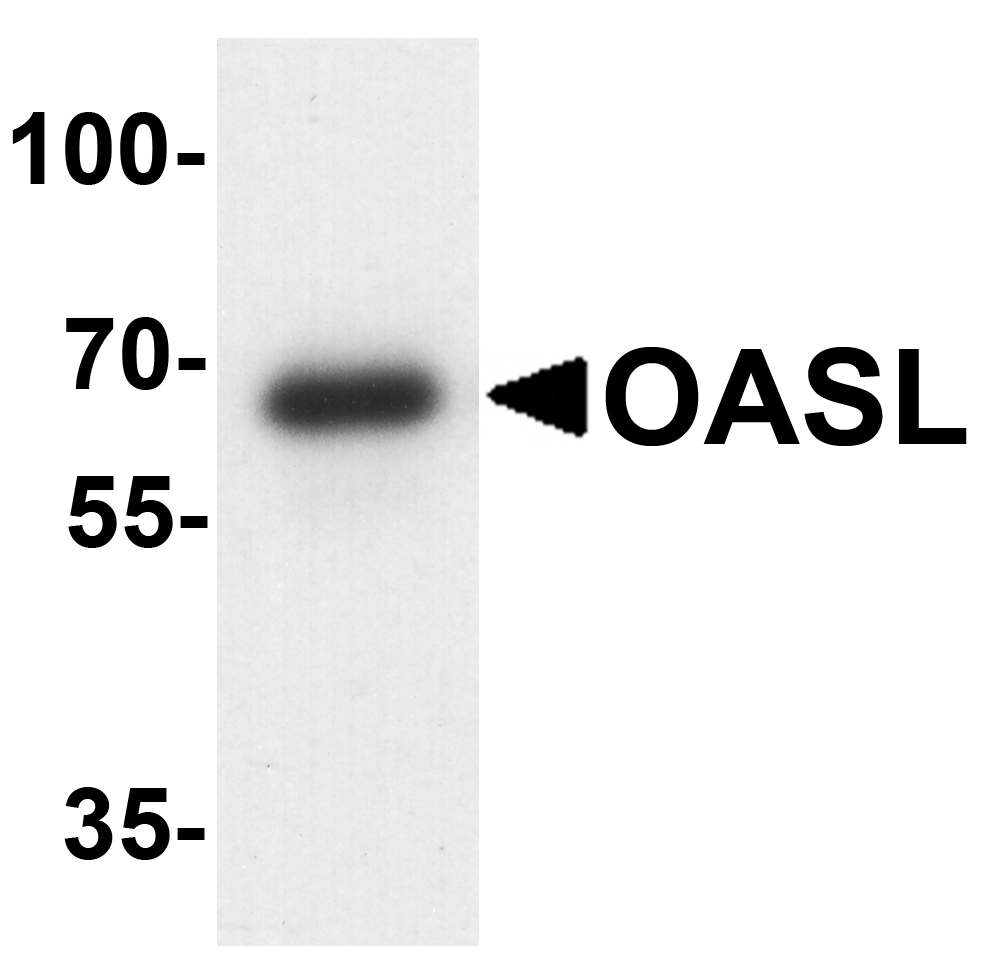
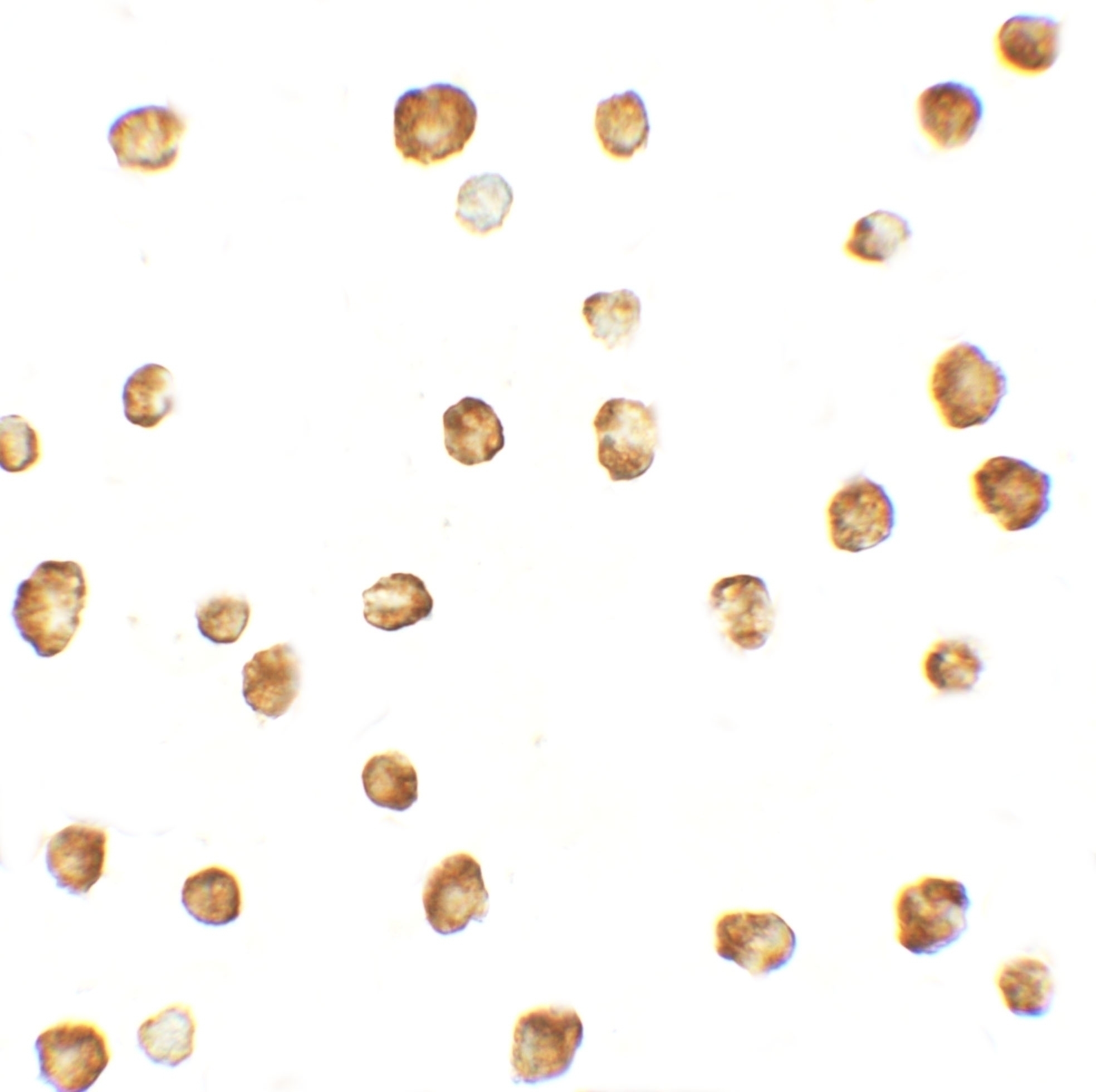
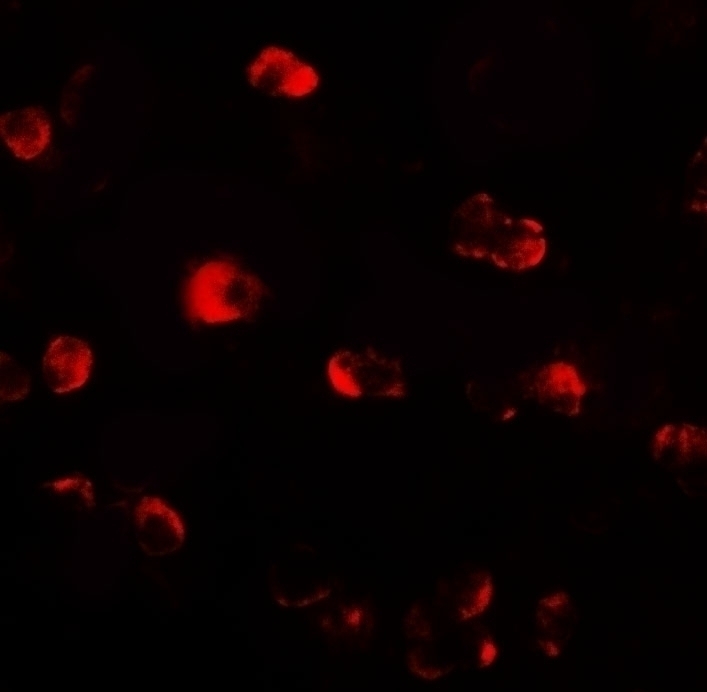
OASL antibody can be used for detection of OASL by Western blot at 1 - 2 μg/ml. Antibody can also be used for Immunocytochemistry at 2.5 μg/mL. For Immunoflorescence start at 20 μg/mL.
Antibody validated: Western Blot in mouse samples; Immunocytochemistry in human samples and Immunofluorescence in human samples. All other applications and species not yet tested.
Specificity:
OASL antibody is human, mouse and rat reactive.
Positive Control 1:
Cat. No. 1410 - Mouse Bladder Tissue Lysate
Positive Control 2:
Cat. No. 17-011 - Hep G2 Cell Slide
Predicted Molecular Weight:
Predicted: 57 kDa
Observed: 65 kDa
Purification:
OASL antibody is affinity chromatography purified via peptide column.
Clonality:
Polyclonal
Isotype:
IgG
Physical State:
Liquid
Buffer:
OASL Antibody is supplied in PBS containing ≤0.09% sodium azide.
Concentration:
1 mg/mL
Storage Conditions:
OASL antibody can be stored at 4°C for three months and -20°C, stable for up to one year.
Ncbi Official Symbol:
OASL
Additional Names:
OASL Antibody: OASLd, TRIP14, TRIP-14, p59OASL, p59 OASL, p59-OASL, Thyroid receptor-interacting protein 14, TR-interacting protein 14
Protein Accession Number:
NP_003724
Protein Gi Number:
11321577
Ncbi Gene Id Number:
8638
User Note:
Optimal dilutions for each application to be determined by the researcher.
Background:
OASL (2'-5'-oligoadenylate synthetase-like), also known as p59OASL or TRIP14 (thyroid receptor-interacting protein 14), is a 514 amino acid protein that exists as two alternatively spliced isoforms, designated p56 and p30, and contains two ubiquitin-like domains (1). It is widely expressed in a variety of tissues and interacts with the ligand binding domain of the thyroid receptor (TR) and is able to bind double-stranded RNA and DNA, possibly playing a role in RNA degradation and the overall inhibition of protein synthesis (2-3). Methyl CpG-binding protein 1 (MBD1), which functions as a transcriptional repressor, was identified as a strong p59 OASL interactor (4).
Background Reference 1:
Rebouillat D, Marie I, and Hovanessian AG. Molecular cloning and characterization of two related and interferon-induced 56 kDa and 30 kDa proteins highly similar to 2'-5' oligoadenylate synthetase. Eur. J. Biochem. 1998; 257:319-30.
Background Reference 2:
Hartmann R, Olsen HS, Widder S, et al. p59OASL, a 2'-5' oligoadenylate synthetase like protein: a novel human gene related to the 2'-5' oligoadenylate synthetase family. Nucleic Acids Res. 1998; 26:4121-8.
Background Reference 3:
Hovnanian A, Rebouillat D, Levy ER, et al. The human 2',5'-oligoadenylate synthetaselike gene (OASL) encoding the interferon-induced 56 kDa protein maps to chromosome 12q24.2 in the proximity of the 2',5'-OAS locus. Genomics 1999; 56:362-3.
Background Reference 4:
Andersen JB, Strandbygård DJ, Hartmann R, et al. Interaction between the 2'-5' oligoadenylate synthetase-like protein p59 OASL and the transcriptional repressor methyl CpG-binding protein 1. Eur. J. Biochem. 2004; 271:628-36.

FOR RESEARCH USE ONLY

For additional information, visit ProSci’s Terms & Conditions Page.

Disclaimer:
Optimal dilutions/concentrations should be determined by the end user. The information provided is a guideline for product use. This product is for research use only.

CATALOG NUMBER:

7775

List Size:
0.02 mg, 0.1 mg

List Price:

Price range: $99.00 through $445.00

Shipping Info
Customize your order
Custom Antibody Services

New & Featured Products

CATALOG NUMBER: PM-7369-HRP

CATALOG NUMBER: PM-7369-biotin

CATALOG NUMBER: PM-7369