Green Product
Trial Size

OCLN Antibody

CATALOG NUMBER: 5191

Clonality:
Polyclonal
Tested Applications:
ELISA, IF, IHC-P, WB
Host Species:
Rabbit
Species Reactivity:
Human, Mouse, Rat
Conjugate:
Unconjugated
Specifications
Host Species:
Rabbit
Species Reactivity:
Human, Mouse, Rat
Immunogen:
OCLN antibody was raised against a 15 amino acid synthetic peptide from near the carboxy terminus of human OCLN.
The immunogen is located within the last 50 amino acids of OCLN.
Conjugate:
Unconjugated
Tested Applications:
ELISA, IF, IHC-P, WB
Application Note:
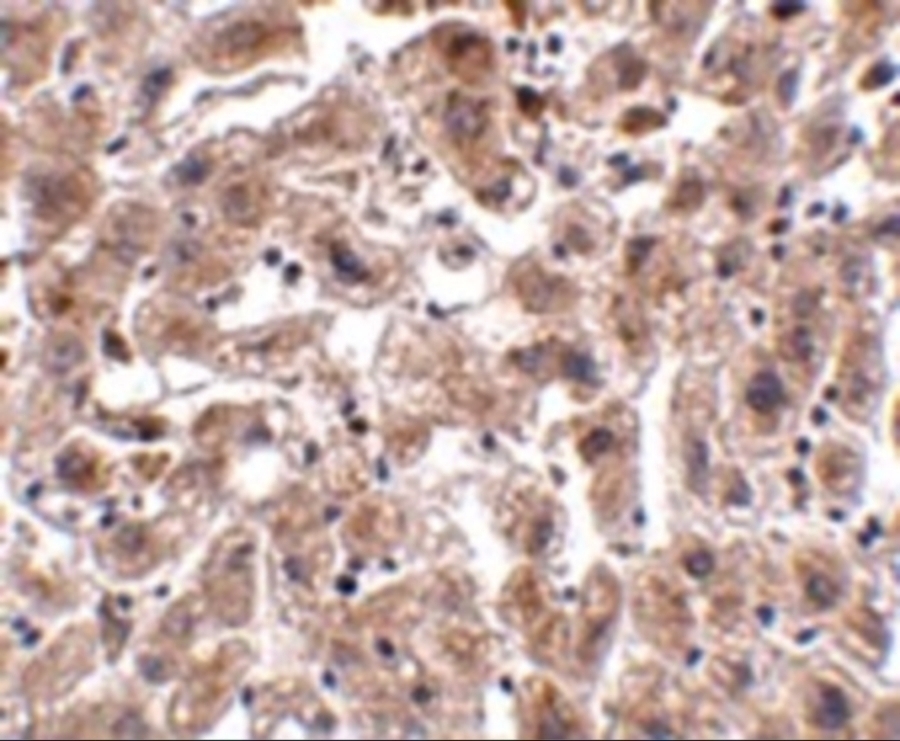
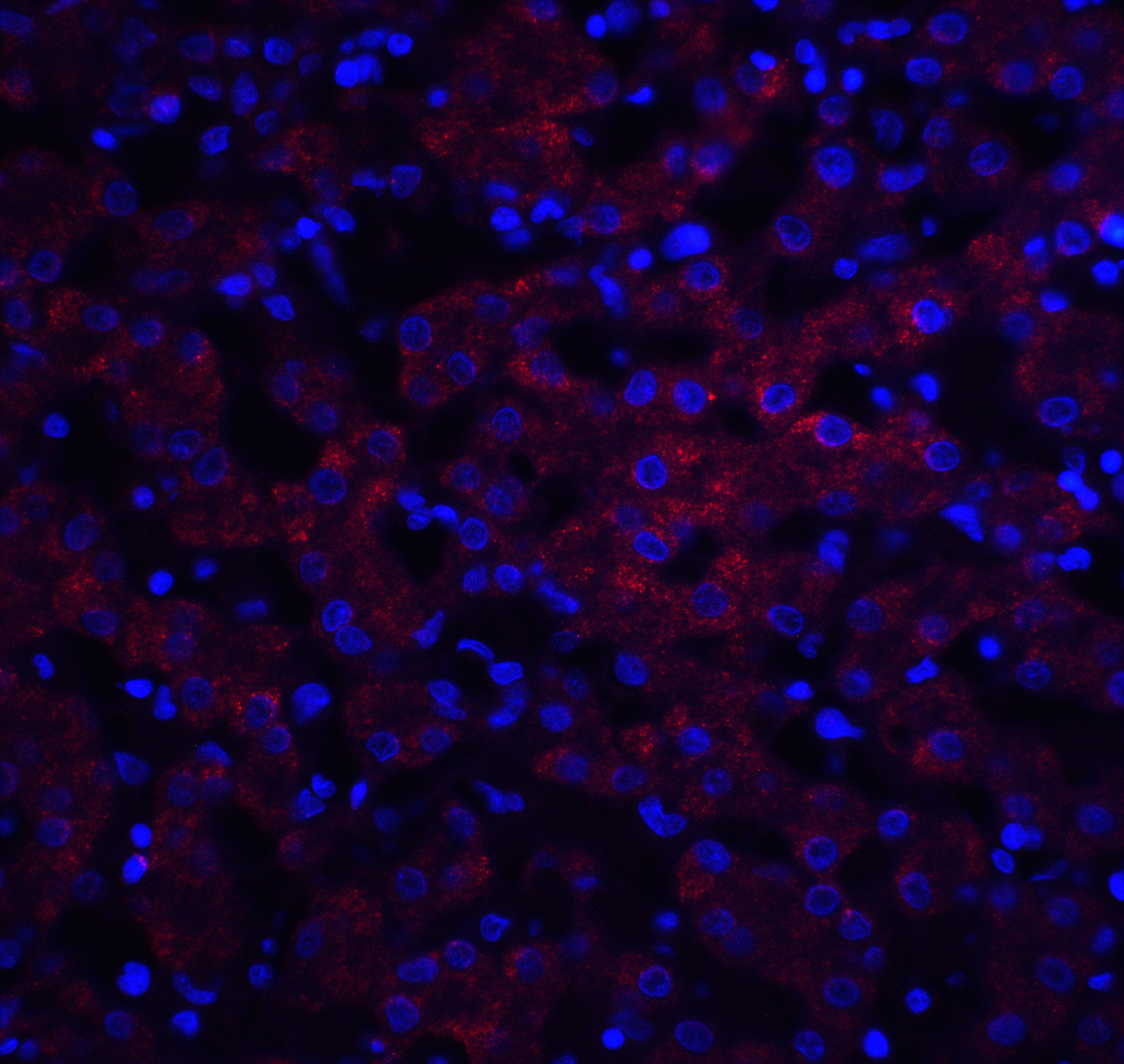
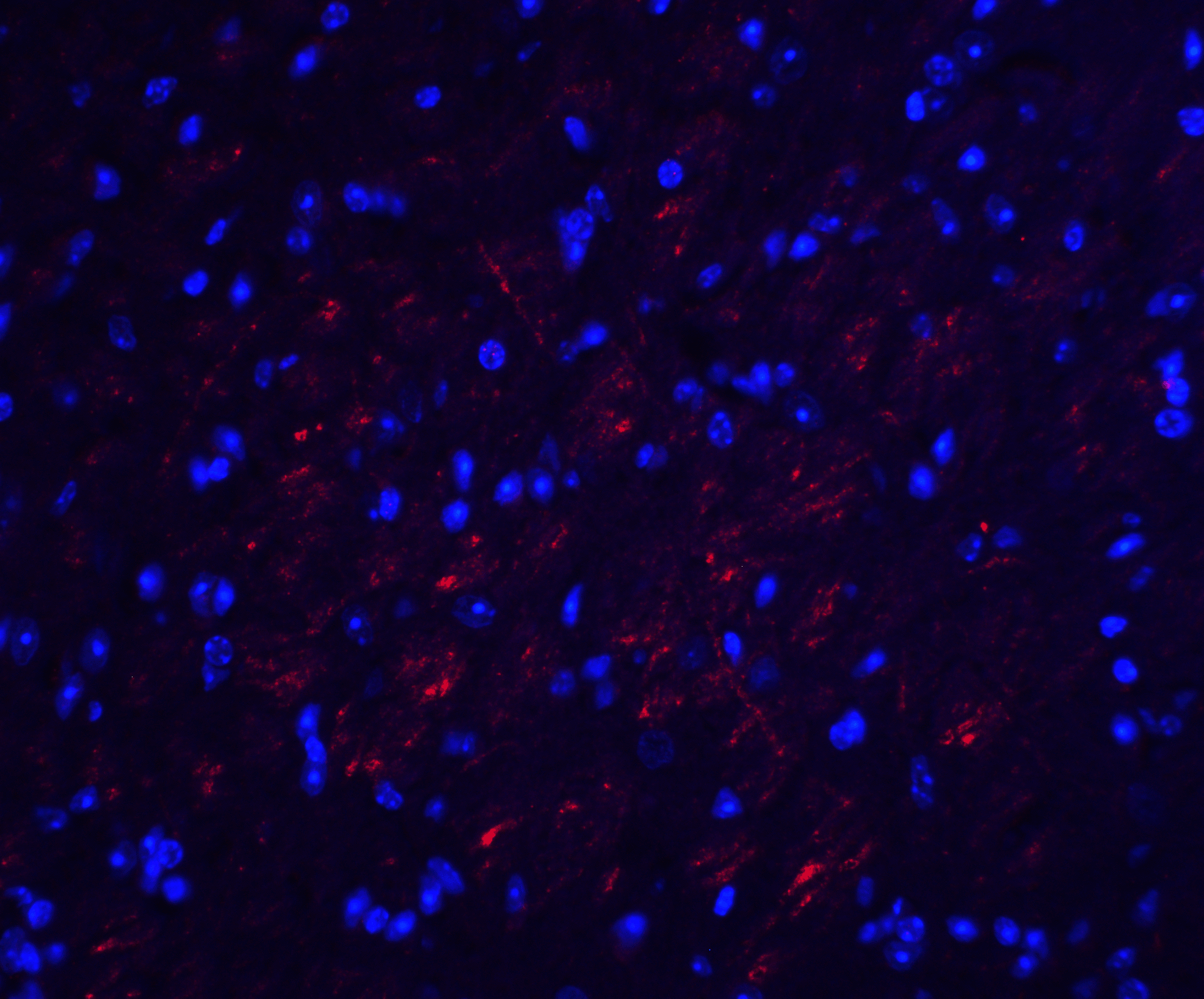
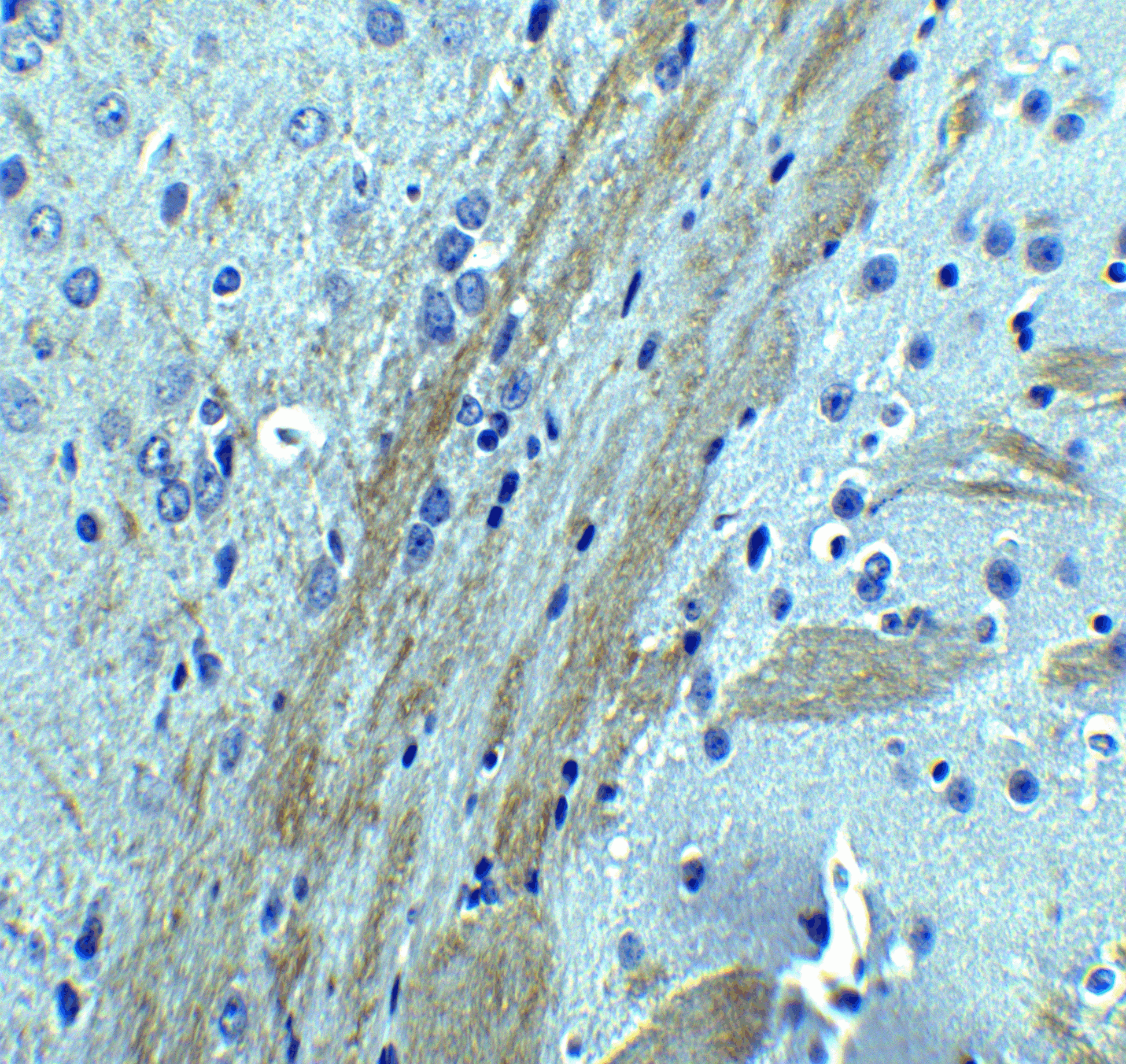
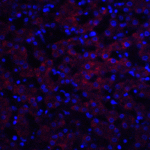
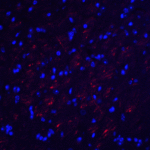
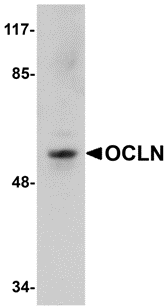
OCLN antibody can be used for detection of OCLN by Western blot at 1 μg/mL. Antibody can also be used for immunohistochemistry starting at 2.5 μg/mL. For immunofluorescence start at 20 μg/mL.
Antibody validated: Western Blot in human samples; Immunohistochemistry in human and mouse samples and Immunofluorescence in human and mouse samples. All other applications and species not yet tested.
Specificity:
At least three isoforms of OCLN are known to exist.
Positive Control 1:
Cat. No. 1304 - Human Liver Tissue Lysate
Positive Control 2:
Cat. No. 10-201 - Human Liver Tissue Slide
Predicted Molecular Weight:
Predicted: 57 kDa
Observed: 57 kDa
Purification:
OCLN Antibody is affinity chromatography purified via peptide column.
Clonality:
Polyclonal
Isotype:
IgG
Physical State:
Liquid
Buffer:
OCLN Antibody is supplied in PBS containing ≤0.09% sodium azide.
Concentration:
1 mg/mL
Storage Conditions:
OCLN antibody can be stored at 4°C, stable for up to one year. Antibodies should not be exposed to prolonged high temperatures.
Ncbi Official Symbol:
OCLN
Additional Names:
OCLN Antibody: BLCPMG, Occludin
Protein Accession Number:
AAH29886
Protein Gi Number:
20987418
Ncbi Gene Id Number:
4950
User Note:
Optimal dilutions for each application to be determined by the researcher.
Background:
OCLN Antibody: Tight junctions act as a semi-permeable barrier to the transport of ions, solutes, and water and are considered to function as a fence that divides apical and basolateral domains of plasma membranes. Tight junctions coordinate a variety of signaling and trafficking molecules regulating cell differentiation, proliferation, and polarity and contain a number of junctional proteins including Occludin, Claudins, junctional adhesion molecules (JAMs), as well as multiple scaffold proteins. Occludin, the first identified component of tight junction strands, is thought function as a signal transmitter in multiple signaling pathways and can associate with multiple kinases and phosphatases such as PI3-kinase and protein phosphatases 1 and 2A. At least two isoforms of OCLN are known to exist.

Background Reference 1:
Tsukita S, Furuse M, and Itoh M. Multifunctional strands in tight junctions. Nat. Rev. Mol. Cell Biol. 2001; 2:285-93.
Background Reference 2:
Chiba H, Osanai M, Murata M, et al. Transmembrane proteins of tight junctions. Biochim. Biophys. Acta 2008; 1778:588-600.
Background Reference 3:
Furuse M, Hirase T, Itoh M, et al. Occludin: a novel integral membrane protein localizing at tight junctions. J. Cell Biol.1993; 1777-88.
Background Reference 4:
Matter K, Aijaz S, Tsapara A, et al. Mammalian tight junctions in the regulation of epithelial differentiation and proliferation. Curr. Opin. Cell Biol. 2005; 17:453-8.

FOR RESEARCH USE ONLY

For additional information, visit ProSci’s Terms & Conditions Page.

Disclaimer:
Optimal dilutions/concentrations should be determined by the end user. The information provided is a guideline for product use. This product is for research use only.

CATALOG NUMBER:

5191

List Size:
0.02 mg, 0.1 mg

List Price:

Price range: $99.00 through $445.00

Shipping Info
Customize your order
Custom Antibody Services

New & Featured Products

CATALOG NUMBER: PM-7369-HRP

CATALOG NUMBER: PM-7369-biotin

CATALOG NUMBER: PM-7369