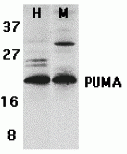
Figure 1 Western Blot Validation of PUMA in K562 and 3T3/NIH Cells Loading: 15 μg of lysates per lane.Antibodies: 3041 (2 μg/mL), 1 h incubation at RT in 5% NFDM/TBST.Secondary: Goat anti-rabbit IgG HRP conjugate at 1:10000 dilution.
Cell Treatment
IAV
KD
Most Cited
Trial Size
PUMA Antibody
CATALOG NUMBER: 3041
Clonality:
Polyclonal
Tested Applications:
ELISA, ICC, IF, WB
Host Species:
Rabbit
Species Reactivity:
Human, Mouse
Conjugate:
Unconjugated
Specifications
Host Species:
Rabbit
Species Reactivity:
Human, Mouse
Homology:
Predicted species reactivity based on immunogen sequence: Rat: (100%)
Immunogen:
Anti-PUMA antibody (3041) was raised against a peptide corresponding to 14 amino acids near the carboxyl terminus human PUMA isoform 1. The immunogen is located within the last 50 amino acids of PUMA.
Conjugate:
Unconjugated
Tested Applications:
ELISA, ICC, IF, WB
Application Note:
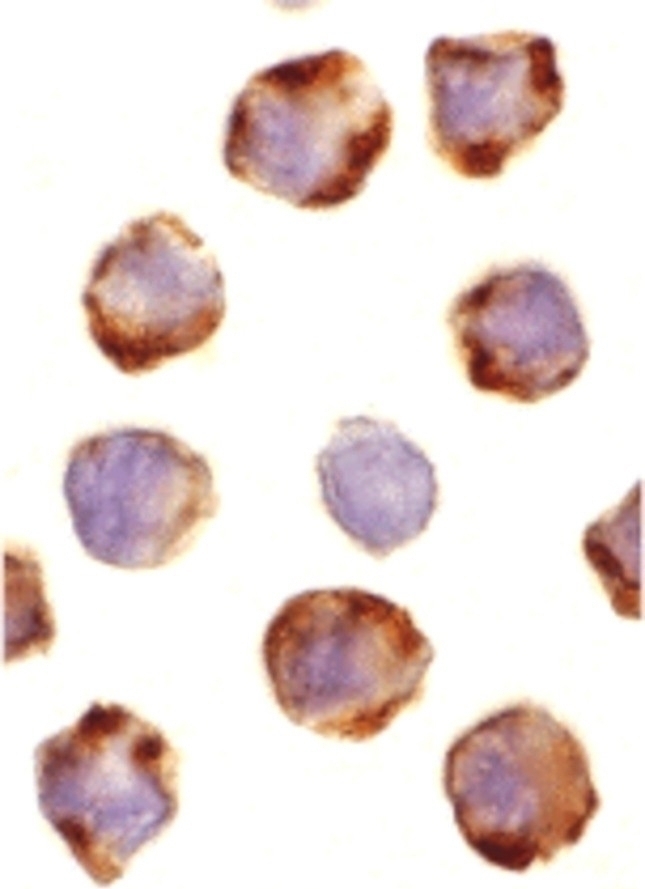
WB: 1-4 μg/mL; IF: 2 μg/mL; ICC: 1 μg/mL. Antibody validated: Western Blot in human and mouse samples; Immunocytochemistry and Immunofluorescence in human samples. All other applications and species not yet tested.
Specificity:
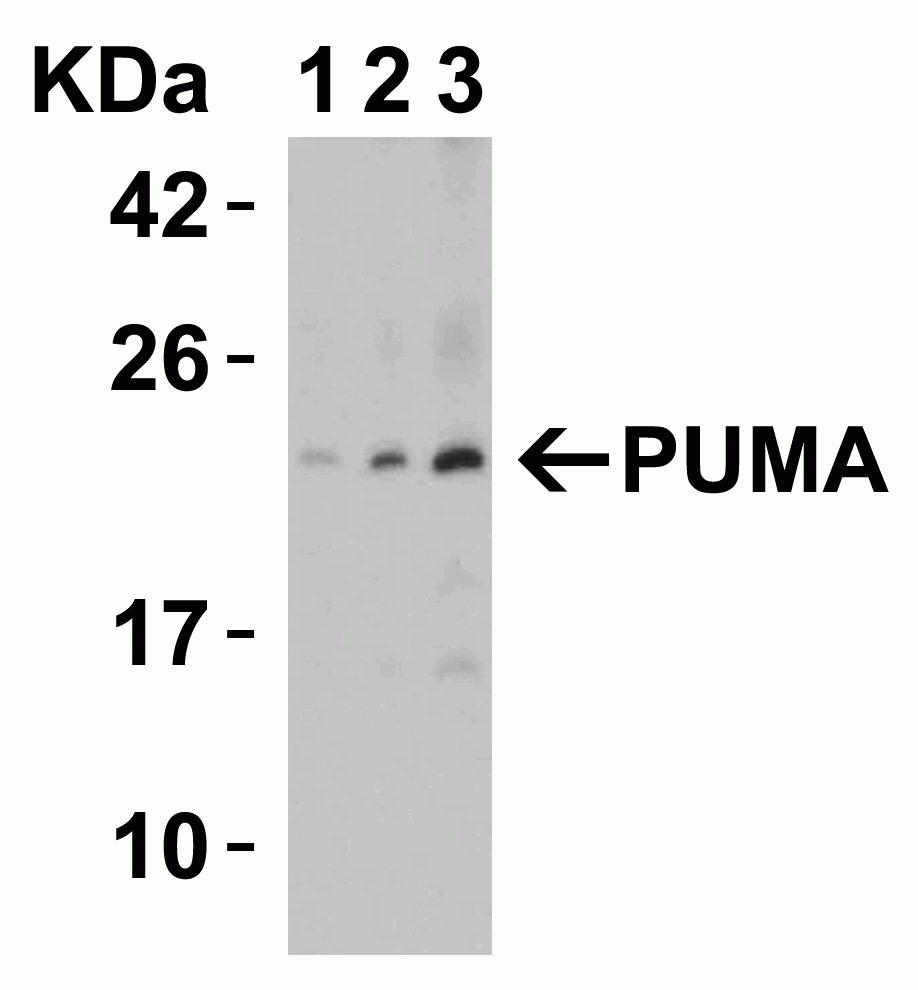
A lower band at approximately 16 kDa was detected in Daudi and K562 cells, which may represent the PUMA isoform 2.
Positive Control 1:
Cat. No. 1210 - 293 Cell Lysate
Positive Control 2:
Cat. No. 1211 - HepG2 Cell Lysate
Positive Control 3:
Cat. No. 1220 - SK-N-SH Cell Lysate
Positive Control 4:
Cat. No. 1204 - K562 Cell Lysate
Predicted Molecular Weight:
23 kDa
Advanced Validation
Validation:
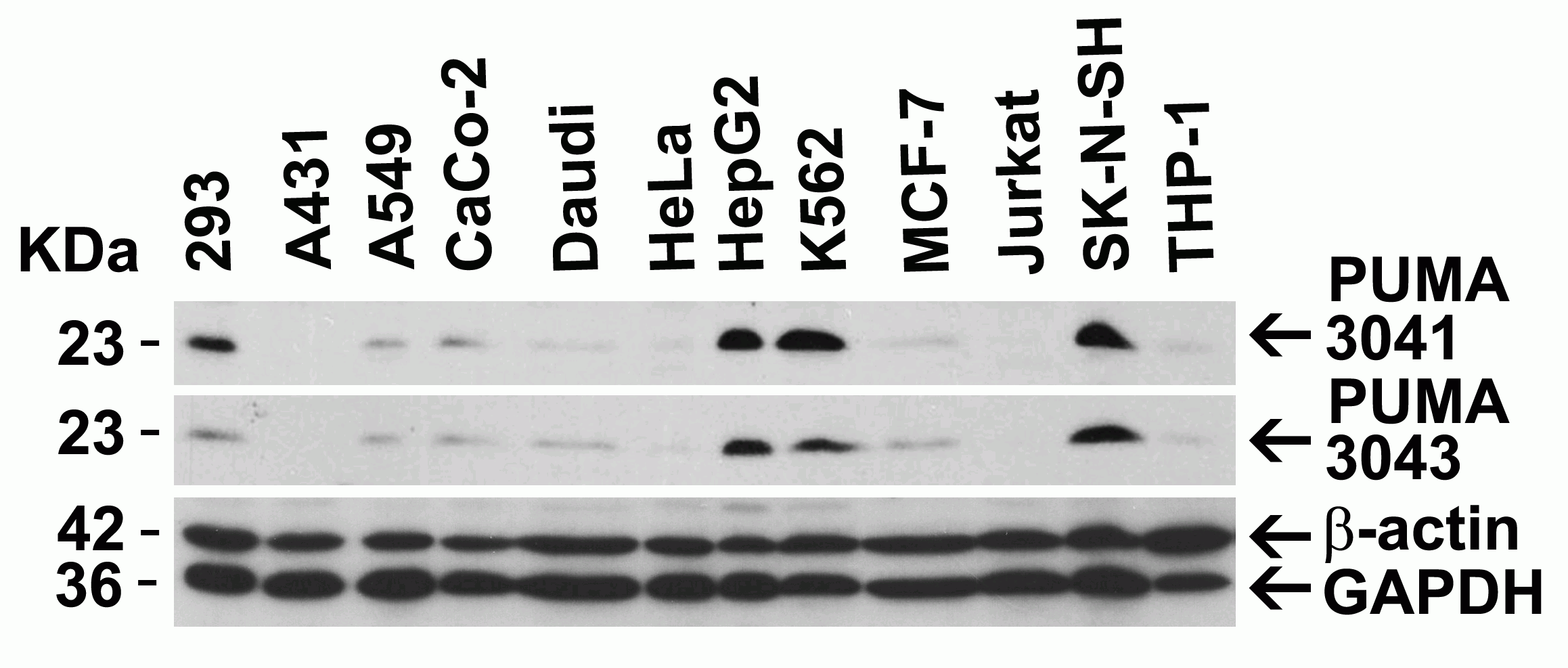
Independent Antibody Validation (Figure 2) shows similar PUMA expression profile in both human and mouse cell lines detected by two independent anti-PUMA antibodies that recognize different epitopes, 3041 against C-terminus and 3043 against the N-terminus. PUMA proteins are detected in most of the cell lines with different expression levels by the two independent antibodies.
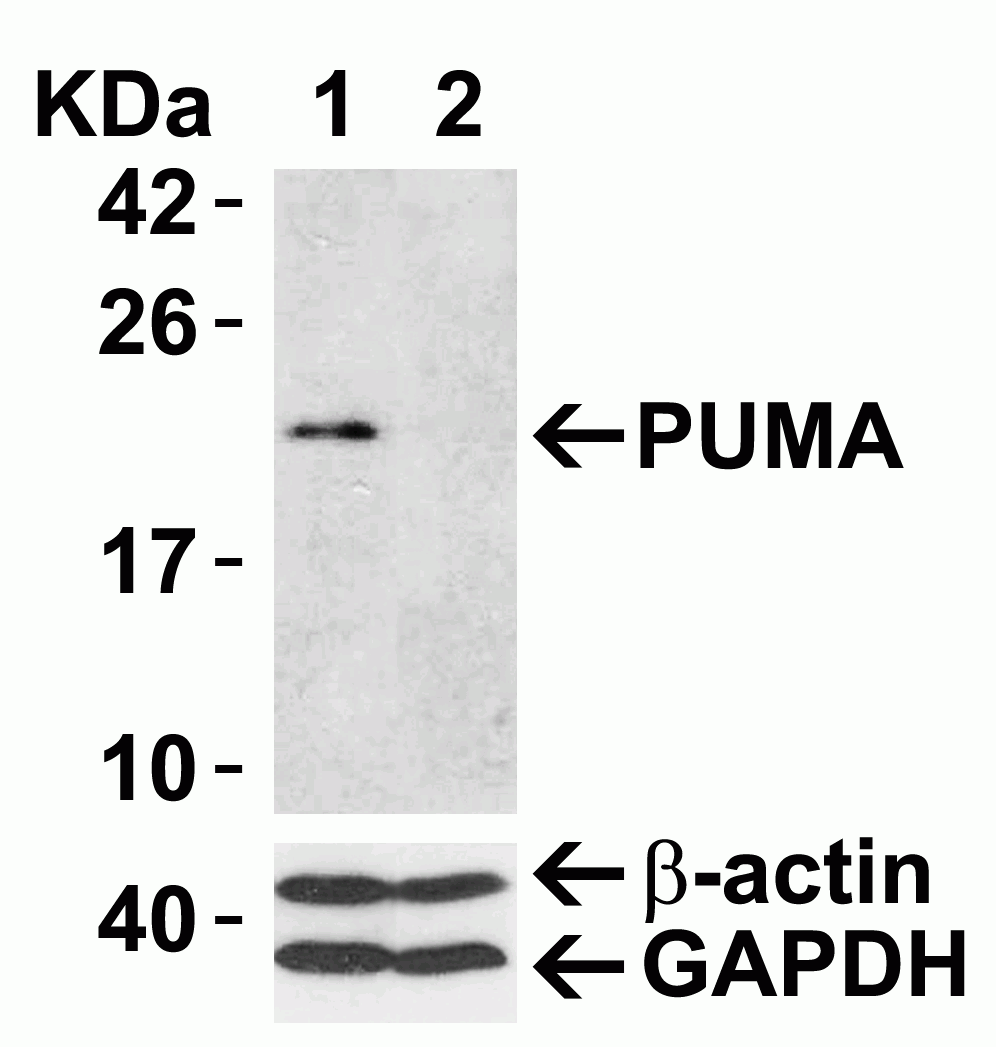
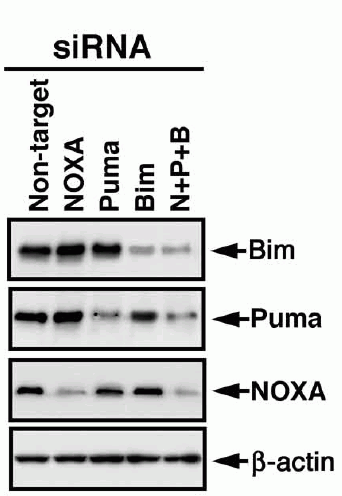
siRNA Knockdown Validation (Figure 3): Anti-PUMA antibody (3041) specificity was further verified by PUMA specific siRNA knockdown. PUMA signal in HeLa cells transfected with PUMA siRNAs was much weaker in comparison with that in HeLa cells transfected with control siRNAs.
Isoforms:
Human PUMA has 4 isoforms, including isoform 1 (193aa, 21kD), isoform 2 (131aa, 14kD), isoform 3 (101aa, 10kD) and isofrom 4 (261aa, 27kD). This antibody detects human isoform 1&2, mouse and rat PUMA (193aa, 21kD for both of them).
Properties
Purification:
PUMA Antibody is affinity chromatography purified via peptide column.
Clonality:
Polyclonal
Isotype:
IgG
Physical State:
Liquid
Buffer:
PUMA Antibody is supplied in PBS containing ≤0.09% sodium azide.
Concentration:
1 mg/mL
Storage Conditions:
PUMA antibody can be stored at 4°C for three months and -20°C, stable for up to one year. As with all antibodies care should be taken to avoid repeated freeze thaw cycles. Antibodies should not be exposed to prolonged high temperatures.
Optimal dilutions for each application to be determined by the researcher.
Background
Background:
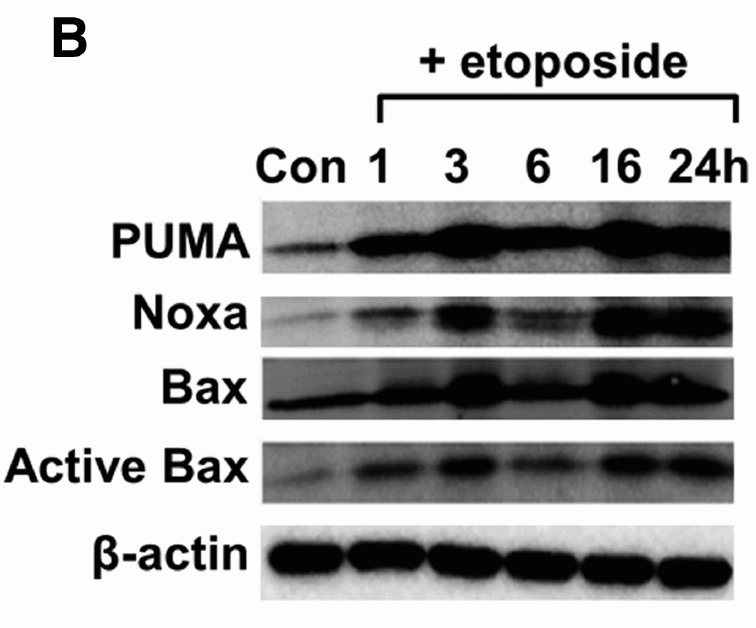
PUMA Antibody: Apoptosis is related to many diseases and development. The p53 tumor-suppressor protein induces apoptosis through transcriptional activation of several genes. A novel p53 inducible pro-apoptotic gene was identified recently and designated PUMA (for p53 upregulated modulator of apoptosis) and bbc3 (for Bcl-2 binding component 3) in human and mouse. PUMA/bbc3 is one of the pro-apoptotic Bcl-2 family members including Bax and Noxa, which are also transcriptional targets of p53 (1). The PUMA gene encodes two BH3 domain-containing proteins termed PUMA-alpha and PUMA-beta (2). PUMA proteins bind Bcl-2, localize to the mitochondria, and induce cytochrome c release and apoptosis in response to p53. PUMA may be a direct mediator of p53-induced apoptosis.
Background Reference 1:
Nakano and Vousden. Mol Cell. 2001; 7(3)683-94
Background Reference 2:
Han et al. Proc Natl Acad Sci U S A. 2001;98(20):11318-23.
Citations
Citation 1:
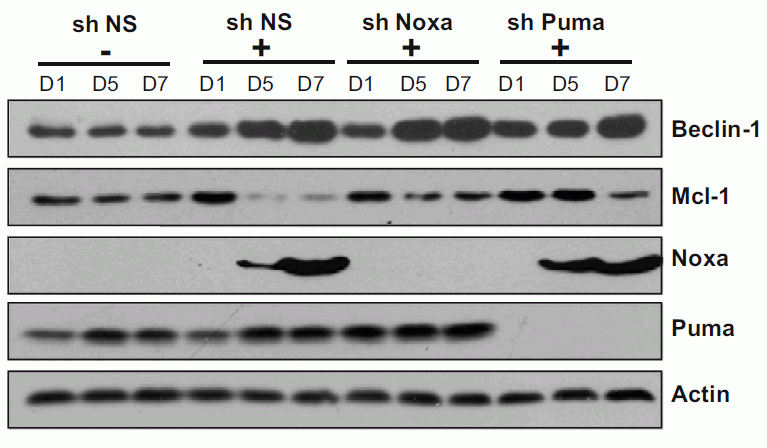
Elgendy et al. Oncogenic Ras-induced expression of Noxa and beclin-1 promotes autophagic cell death and limits clonogenic survival. Mol. Cell. 2011;42(1):23-35. PMID: 21353614
Citation 2:
Han et al. Regulation of mitochondrial apoptotic events by p53-mediated disruption of complexes between anti-apoptotic Bcl-2 members and Bim. J.B.C. 2010; 285(29):22473-83. PMID: 20404322
Citation 3:
Sabirzhanov et al. Downregulation of miR-23a and miR-27a following experimental traumatic brain injury induces neuronal cell death through activation of proapoptotic Bcl-2 proteins. J Neurosci. 2014;34(30):10055-71. PMID: 25057207
Citation 4:
O'Neill et al. Inactivation of prosurvival Bcl-2 proteins activates Bax/Bak through the outer mitochondrial membrane. Genes Dev. 2016;30(8):973-88. PMID: 27056669
Citation 5:
Sabirzhanov et al. miR-711 upregulation induces neuronal cell death after traumatic brain injury. Cell Death Differ. 2016;23(4):654-68. PMID: 26470728
Citation 6:
Shi et al. NSC-87877 inhibits DUSP26 function in neuroblastoma resulting in p53-mediated apoptosis. Cell Death Dis. 2015;6:e1841. PMID: 26247726
Citation 7:
Meng et al. Dose-response transition from cell cycle arrest to apoptosis with selective degradation of Mdm2 and p21WAF1/CIP1 in response to the novel anticancer agent, aminoflavone (NSC 686,288). Oncogene. 2007;26(33):4806-16. PMID: 17297446
Citation 8:
Lee and Pelletier. Dependence of p53-deficient cells on the DHX9 DExH-box helicase. Oncotarget. 2017;8(19):30908-30921. PMID: 28427210
Optimal dilutions/concentrations should be determined by the end user. The information provided is a guideline for product use. This product is for research use only.
We use cookies on our website to give you the most relevant experience by remembering your preferences and repeat visits. By clicking “Accept”, you consent to the use of cookies.
This website uses cookies to improve your experience while you navigate through the website. Out of these, the cookies that are categorized as necessary are stored on your browser as they are essential for the working of basic functionalities of the website. We also use third-party cookies that help us analyze and understand how you use this website. These cookies will be stored in your browser only with your consent. You also have the option to opt-out of these cookies. But opting out of some of these cookies may affect your browsing experience.
Necessary cookies are absolutely essential for the website to function properly. These cookies ensure basic functionalities and security features of the website, anonymously.
Cookie
Duration
Description
cookielawinfo-checbox-analytics
11 months
This cookie is set by GDPR Cookie Consent plugin. The cookie is used to store the user consent for the cookies in the category "Analytics".
cookielawinfo-checbox-functional
11 months
The cookie is set by GDPR cookie consent to record the user consent for the cookies in the category "Functional".
cookielawinfo-checbox-others
11 months
This cookie is set by GDPR Cookie Consent plugin. The cookie is used to store the user consent for the cookies in the category "Other.
cookielawinfo-checkbox-necessary
11 months
This cookie is set by GDPR Cookie Consent plugin. The cookies is used to store the user consent for the cookies in the category "Necessary".
cookielawinfo-checkbox-performance
11 months
This cookie is set by GDPR Cookie Consent plugin. The cookie is used to store the user consent for the cookies in the category "Performance".
viewed_cookie_policy
11 months
The cookie is set by the GDPR Cookie Consent plugin and is used to store whether or not user has consented to the use of cookies. It does not store any personal data.
Functional cookies help to perform certain functionalities like sharing the content of the website on social media platforms, collect feedbacks, and other third-party features.
Performance cookies are used to understand and analyze the key performance indexes of the website which helps in delivering a better user experience for the visitors.
Analytical cookies are used to understand how visitors interact with the website. These cookies help provide information on metrics the number of visitors, bounce rate, traffic source, etc.
Advertisement cookies are used to provide visitors with relevant ads and marketing campaigns. These cookies track visitors across websites and collect information to provide customized ads.




![HIV-1 p24 Antibody [9D2F6] (HRP)](https://www.prosciantibodies.com/wp-content/uploads/2023/04/HIV-1-p24-Antibody-9D2F6_WB_PM-7369-139x300.gif)
![HIV-1 p24 Antibody [9D2F6] (biotin)](https://www.prosciantibodies.com/wp-content/uploads/2023/01/HIV-1-p24-Antibody-9D2F6_WB_PM-7369.gif)
![HIV-1 p24 Antibody [9D2F6]](https://www.prosciantibodies.com/wp-content/uploads/2022/09/HIV-1-p24-Antibody-9D2F6_WB_PM-7369-139x300.gif)