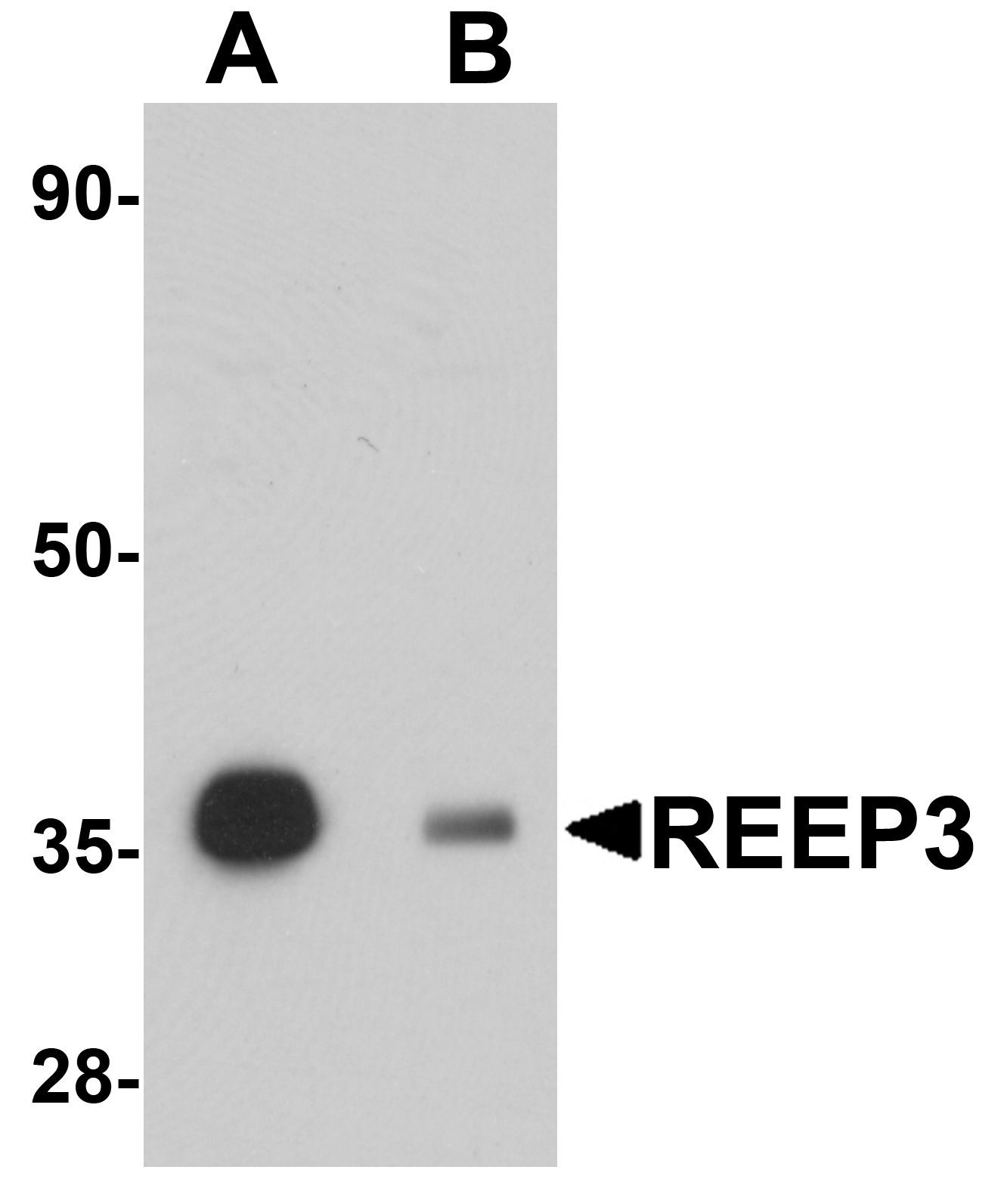
Western blot analysis of REEP3 in rat heart tissue lysate with REEP3 antibody at 1 μg/mL in (A) the absence and (B) the presence of blocking peptide.
Trial Size
REEP3 Antibody
CATALOG NUMBER: 5573
Clonality:
Polyclonal
Tested Applications:
ELISA, ICC, IF, IHC-P, WB
Host Species:
Rabbit
Species Reactivity:
Human, Mouse, Rat
Conjugate:
Unconjugated
Specifications
Host Species:
Rabbit
Species Reactivity:
Human, Mouse, Rat
Immunogen:
REEP3 antibody was raised against a 17 amino acid synthetic peptide near the carboxy terminus of human REEP3. The immunogen is located within the last 50 amino acids of REEP3.
Conjugate:
Unconjugated
Tested Applications:
ELISA, ICC, IF, IHC-P, WB
Application Note:
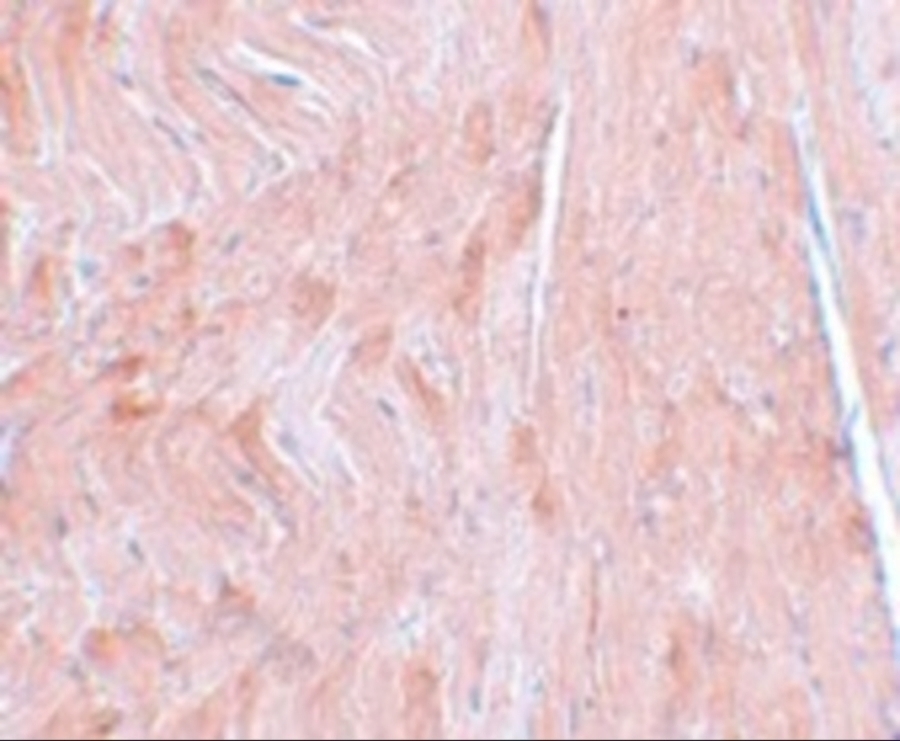
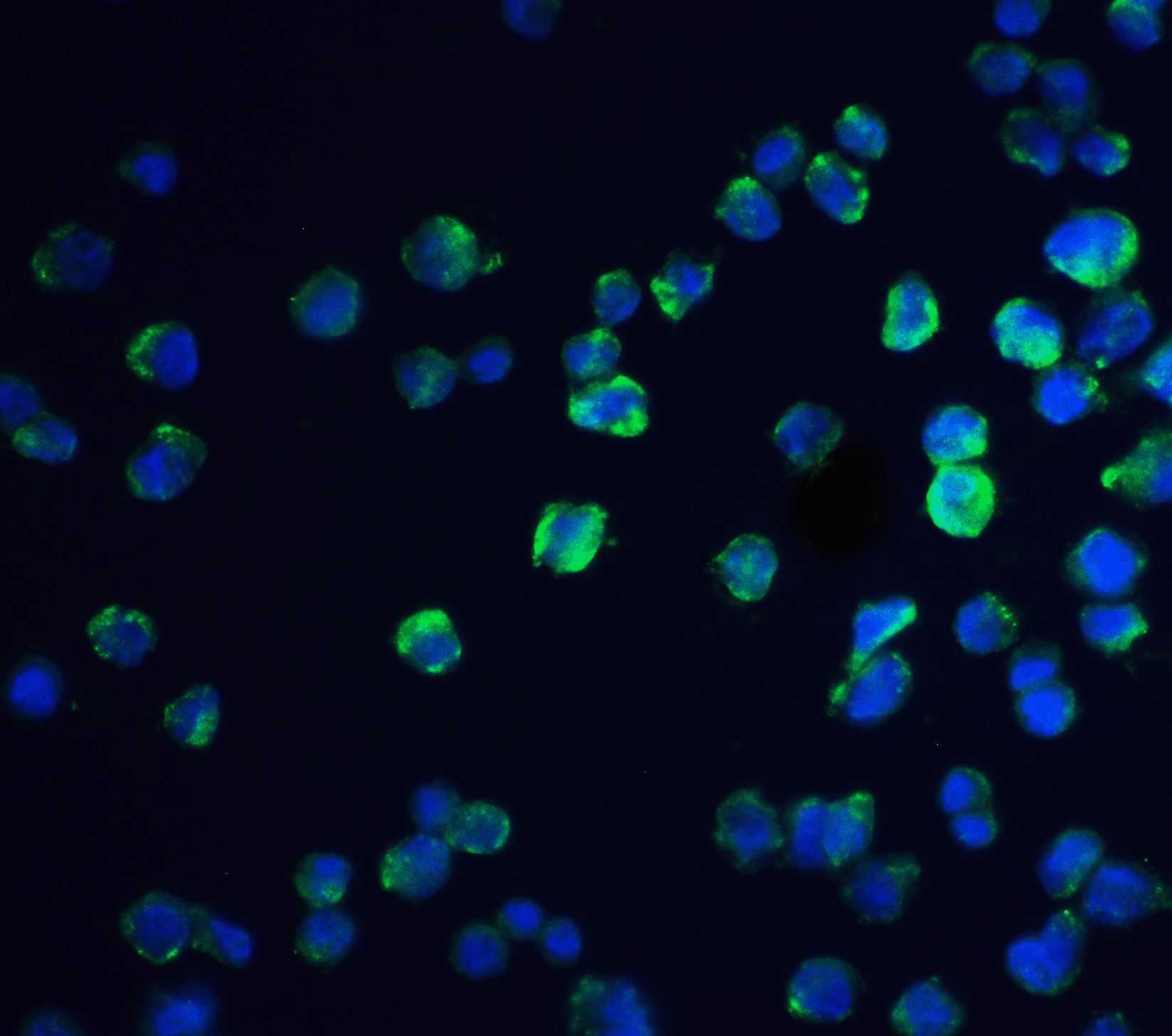
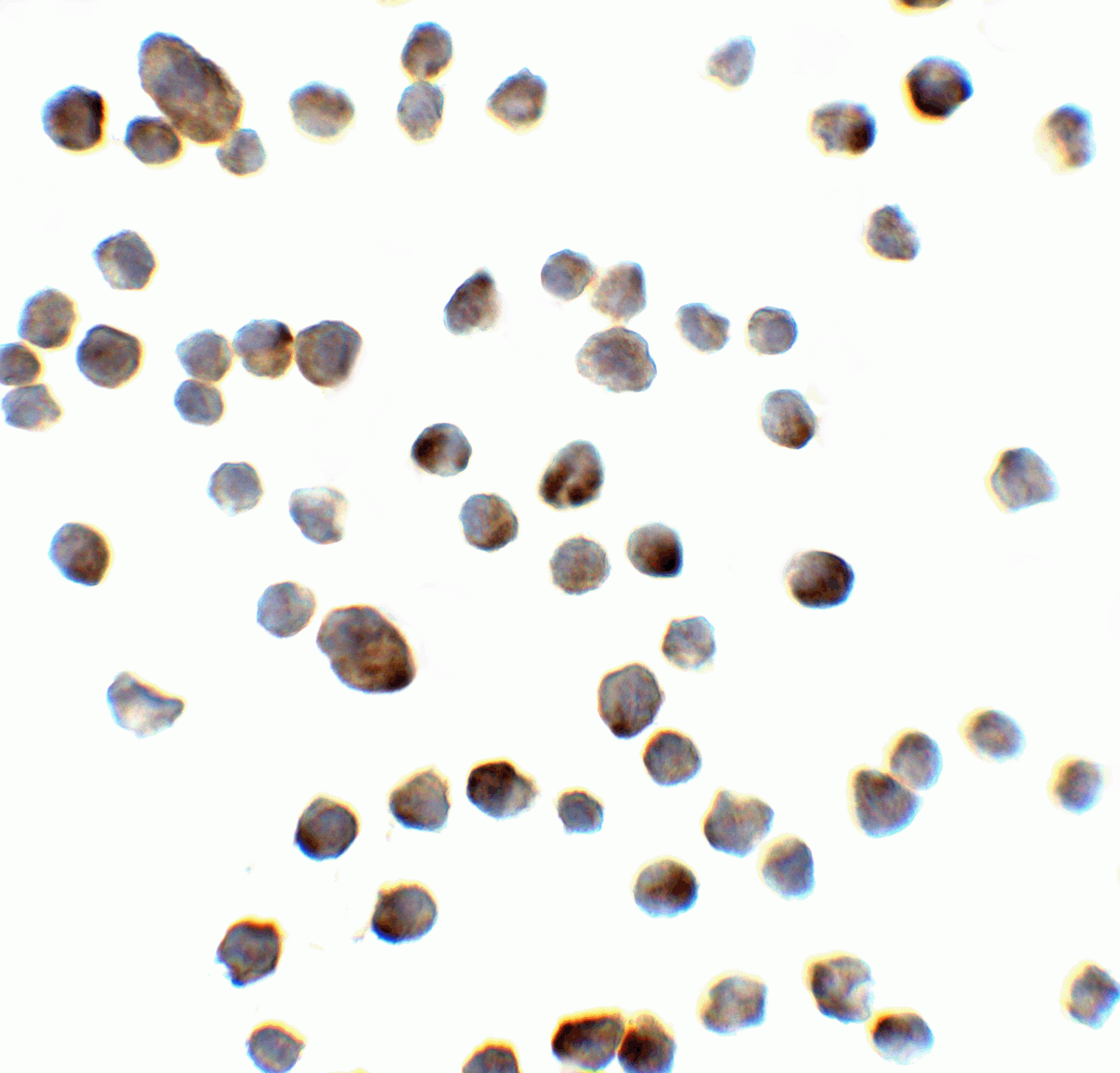
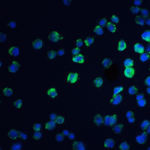
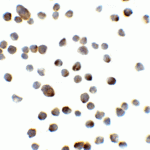
REEP3 antibody can be used for detection of REEP3 by Western blot at 1 μg/mL. Antibody can also be used for immunohistochemistry starting at 5 μg/mL. For immunofluorescence start at 20 μg/mL. Antibody validated: Western Blot in rat samples; Immunohistochemistry in mouse samples; Immunocytochemistry in human samples and Immunofluorescence in human and mouse samples. All other applications and species not yet tested.
Positive Control 1:
Cat. No. 1462 - Rat Lung Tissue Lysate
Advanced Validation
Properties
Purification:
REEP3 Antibody is affinity chromatography purified via peptide column.
Clonality:
Polyclonal
Isotype:
IgG
physical-state:
Liquid
Buffer:
REEP3 Antibody is supplied in PBS containing 0.02% sodium azide.
Concentration:
1 mg/mL
Storage Conditions:
REEP3 antibody can be stored at 4°C for three months and -20°C, stable for up to one year. As with all antibodies care should be taken to avoid repeated freeze thaw cycles. Antibodies should not be exposed to prolonged high temperatures.
Additional Info
Ncbi Official Symbol:
REEP3
Additional Names:
REEP3 Antibody: C10orf74, C10orf74, Receptor expression-enhancing protein 3
Protein Accession Number:
NP_001001330
Protein Gi Number:
47679089
Ncbi Gene Id Number:
221035
User Note:
Optimal dilutions for each application to be determined by the researcher.
Background
Background:
REEP3 Antibody: Mammalian odorant receptors require accessory proteins such as RTP1 and RTP2 for functional cell surface expression. Receptor expression-enhancing protein (REEP) family members are transmembrane proteins which interact with odorant receptor proteins and may enhance the odorant receptor responses to odorants. Recently studies have shown other chemosensory receptors such as bitter taste receptors are also influenced by RTP and REEP family members. REEP3 has also been suggested as a novel candidate gene for autism and as a loci influencing the plasma levels of the liver enzyme alkaline phosphatase.
Background Reference 1:
Saito H, Kubota M, Roberts RW, et al. RTP family members induce functional expression of mammalian odorant receptors. Cell2004; 119:679-91.
Background Reference 2:
Behrens M, Bartelt J, Reichling et al. Members of RTP and REEP gene families influence functional bitter taste receptor expression. J. Biol. Chem.2006; 281:20650-9.
Background Reference 3:
Castermans D, Vermeesch JR, Fryns J-P, et al. Identification and characterization of the TRIP8 and REEP3 genes on chromosome 10q21.3 as novel candidate genes for autism. Euro. J. Hum. Genet.2007; 15:422-31.
Background Reference 4:
Yuan X, Waterworth D, Perry JR, et al. Population-based genome-wide association studies reveal six loci influencing plasma levels of liver enzymes. Am. J. Hum. Genet.2008; 83:520-8.
Optimal dilutions/concentrations should be determined by the end user. The information provided is a guideline for product use. This product is for research use only.
We use cookies on our website to give you the most relevant experience by remembering your preferences and repeat visits. By clicking “Accept”, you consent to the use of cookies.
This website uses cookies to improve your experience while you navigate through the website. Out of these, the cookies that are categorized as necessary are stored on your browser as they are essential for the working of basic functionalities of the website. We also use third-party cookies that help us analyze and understand how you use this website. These cookies will be stored in your browser only with your consent. You also have the option to opt-out of these cookies. But opting out of some of these cookies may affect your browsing experience.
Necessary cookies are absolutely essential for the website to function properly. These cookies ensure basic functionalities and security features of the website, anonymously.
Cookie
Duration
Description
cookielawinfo-checbox-analytics
11 months
This cookie is set by GDPR Cookie Consent plugin. The cookie is used to store the user consent for the cookies in the category "Analytics".
cookielawinfo-checbox-functional
11 months
The cookie is set by GDPR cookie consent to record the user consent for the cookies in the category "Functional".
cookielawinfo-checbox-others
11 months
This cookie is set by GDPR Cookie Consent plugin. The cookie is used to store the user consent for the cookies in the category "Other.
cookielawinfo-checkbox-necessary
11 months
This cookie is set by GDPR Cookie Consent plugin. The cookies is used to store the user consent for the cookies in the category "Necessary".
cookielawinfo-checkbox-performance
11 months
This cookie is set by GDPR Cookie Consent plugin. The cookie is used to store the user consent for the cookies in the category "Performance".
viewed_cookie_policy
11 months
The cookie is set by the GDPR Cookie Consent plugin and is used to store whether or not user has consented to the use of cookies. It does not store any personal data.
Functional cookies help to perform certain functionalities like sharing the content of the website on social media platforms, collect feedbacks, and other third-party features.
Performance cookies are used to understand and analyze the key performance indexes of the website which helps in delivering a better user experience for the visitors.
Analytical cookies are used to understand how visitors interact with the website. These cookies help provide information on metrics the number of visitors, bounce rate, traffic source, etc.
Advertisement cookies are used to provide visitors with relevant ads and marketing campaigns. These cookies track visitors across websites and collect information to provide customized ads.


![HIV-1 p24 Antibody [9D2F6] (HRP)](https://www.prosciantibodies.com/wp-content/uploads/2023/04/HIV-1-p24-Antibody-9D2F6_WB_PM-7369-139x300.gif)
![HIV-1 p24 Antibody [9D2F6] (biotin)](https://www.prosciantibodies.com/wp-content/uploads/2023/01/HIV-1-p24-Antibody-9D2F6_WB_PM-7369.gif)
![HIV-1 p24 Antibody [9D2F6]](https://www.prosciantibodies.com/wp-content/uploads/2022/09/HIV-1-p24-Antibody-9D2F6_WB_PM-7369-139x300.gif)