
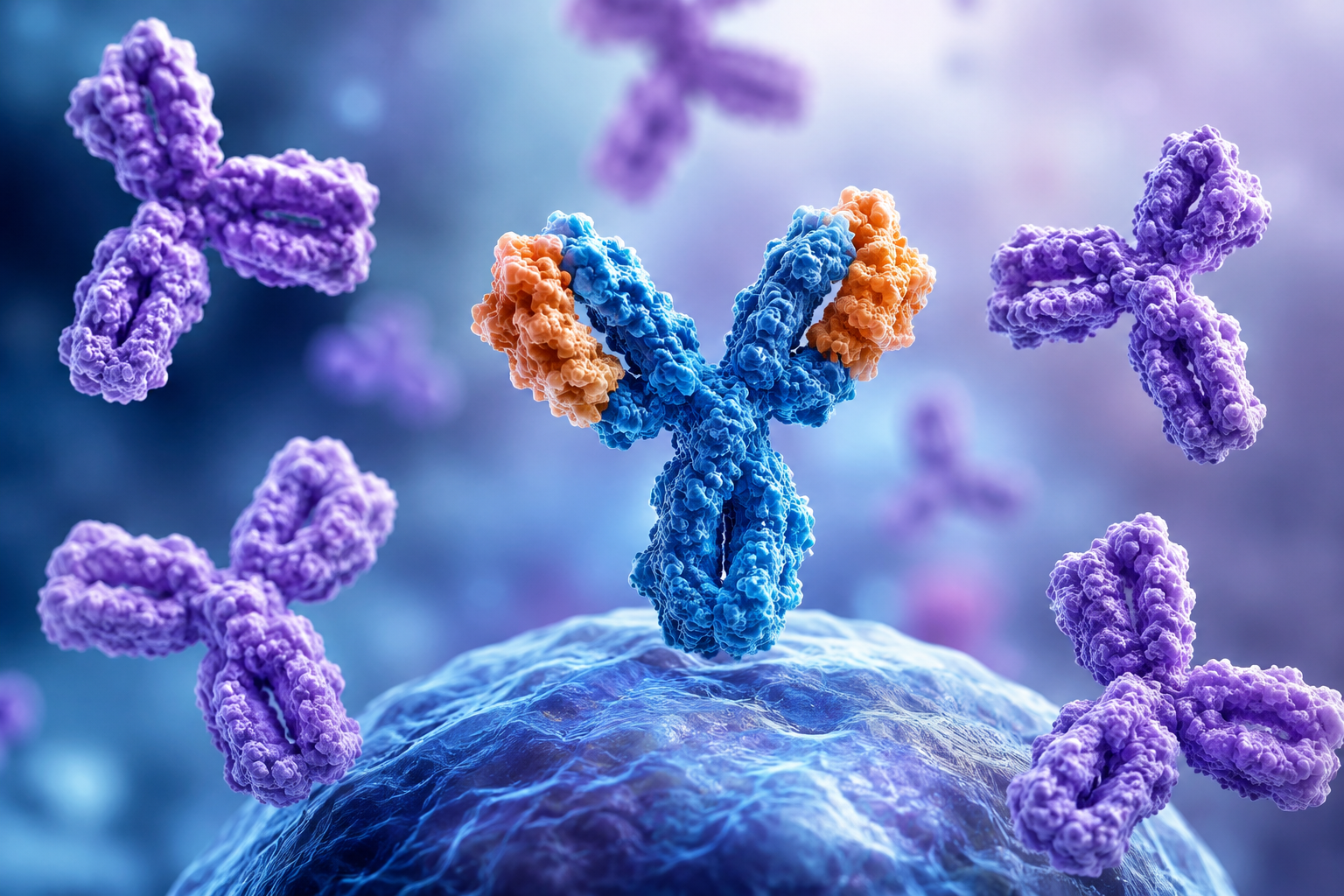
At ProSci, we’ve seen a noticeable increase in requests from biotech and pharmaceutical companies for custom anti-idiotypic (anti-ID) antibodies. As more therapeutic monoclonal antibodies enter preclinical and clinical development, these highly specific bioanalytical reagents are increasingly critical for accurately measuring therapeutic antibodies — particularly in anti-drug antibody (ADA) and pharmacokinetic (PK) assays.
What is an anti-idiotypic antibody?
Unlike conventional antibodies that recognize proteins or peptides, an anti-idiotypic antibody recognizes the unique antigen-binding region — the idiotype — of another antibody. Because every therapeutic monoclonal antibody has a unique variable region, an anti-ID antibody can distinguish one therapeutic antibody from all other endogenous immunoglobulins. This exceptional specificity makes anti-idiotypic antibodies indispensable tools during biologic drug development.
Why are anti-idiotypic antibodies important?
Anti-idiotypic antibodies are necessary for PK/PD, drug safety, and characterization studies throughout clinical drug development and regulatory filings.
Typical applications include:
- Pharmacokinetic (PK) assays
- Anti-drug antibody (ADA) assays
- Immunogenicity testing
- Biomarker assay development
- Surrogate positive control or reference standard
Anti-idiotypic antibodies in ADA assays
ADA assays detect antibodies produced by the immune system against a therapeutic antibody. To validate these assays, laboratories require well-characterized positive controls.
A recent customer summarized this need directly:
“I am working on a program, and we need to generate an anti-idiotypic antibody to a monoclonal antibody that the program needs as a positive control for the upcoming ADA assays in tox and PK studies.”
Without high-quality anti-ID antibodies, validating assay performance becomes significantly more difficult.
Anti-idiotypic antibodies in PK studies
Pharmacokinetic studies measure how therapeutic antibodies behave in vivo. Researchers need reagents capable of specifically detecting the therapeutic antibody without interference from endogenous immunoglobulins. Because anti-idiotypic antibodies bind the unique variable region of the drug antibody, they provide the specificity required for reliable PK assays.
Developing custom anti-idiotypic antibodies
Generating anti-ID antibodies typically begins with the therapeutic monoclonal antibody as the immunogen. Depending on the project’s goals, researchers may generate:
- Monoclonal anti-ID antibodies
- Polyclonal anti-ID antibodies
- Blocking antibodies
- Non-blocking antibodies
- Complex-specific antibodies
The optimal strategy depends on the intended assay format and whether the reagent will be used for PK, ADA, or other bioanalytical applications.
How ProSci can help with anti-idiotypic antibody development
For nearly three decades, ProSci has partnered with researchers developing custom antibody solutions for biotech and pharmaceutical applications. Our expertise includes monoclonal, polyclonal, and specialized antibody development — including anti-idiotypic antibodies for therapeutic programs.
Whether you’re preparing for preclinical PK studies, validating ADA assays, or developing new bioanalytical methods, our scientists work closely with your team to design reagents tailored to your project.
As therapeutic antibody pipelines, biosimilar development, and regulatory requirements continue to expand, anti-idiotypic antibodies are becoming increasingly necessary components of bioanalytical workflows.